Автор: Dr. Charlotte Hardacre

  • Top Mobile Games to Boost Your Teen’s Logical Thinking

    Время на прочтение: 3 минут(ы)

    While phones can be a classroom distraction, outside school, they can become valuable tools for your child’s growth—especially with apps that enhance critical thinking, problem-solving, and logical reasoning.

    The Benefits of Educational Games

    Teens and pre-teens often spend hours playing mobile and computer games, making these platforms not just learning tools but also social experiences. When chosen wisely, educational games can help strengthen:

    • Creativity
    • Mathematical abilities
    • Analytical thinking
    • Perseverance
    • Reaction speed
    • Memory
    • Learning capacity

    Top Educational Games for Kids Aged 10–14

    Engaging a teen or pre-teen in educational activities can be challenging, but educational games cleverly disguise brain exercises as exciting challenges, strategic puzzles, or immersive quests.

    LogicLike
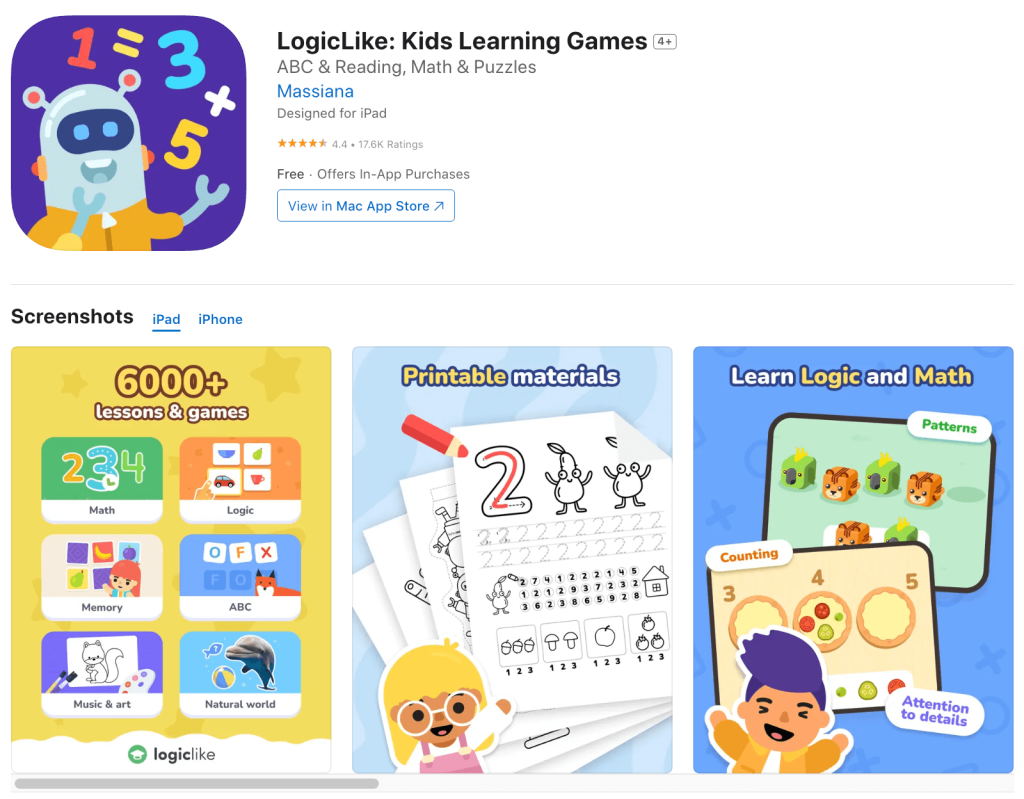
    About the app: This platform offers over 5,500 educational puzzles designed for kids and adults with challenges grouped by objectives—whether for logic building, academic improvement, or competition preparation.

    Why It’s Great: Players can start at an easy level or jump into advanced tasks, tracking progress and competing with friends or other users for extra motivation.

    • Recommended Age: For children and adults.
    • Develops: Logic.
    • Free Trial: Available.
    • Where to Download: App Store and Google Play.

    Lumosity
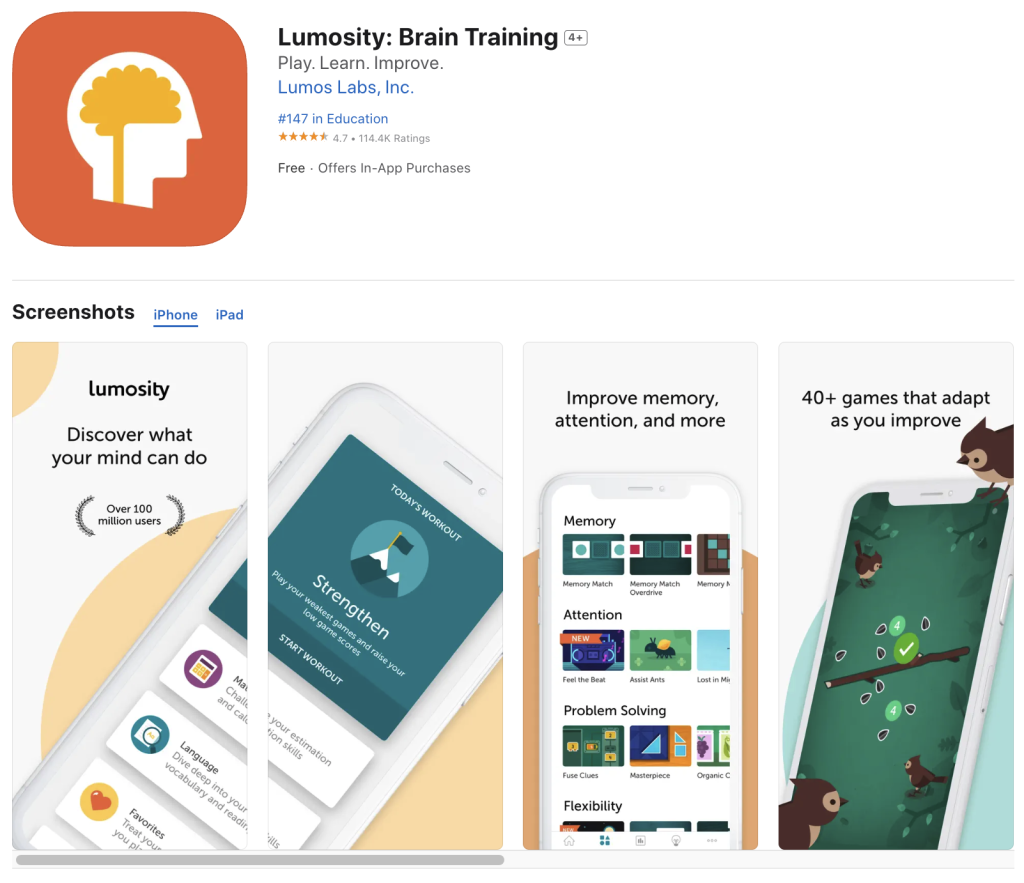
    About the App: A scientifically designed brain-training app, Lumosity offers personalized daily workouts that adjust to user performance, making cognitive training both engaging and adaptive.

    Why It’s Great: This app trains memory, attention, flexibility, speed, and problem-solving—key cognitive abilities that impact academic success, decision-making, and everyday functioning.

    • Recommended Age: For teens and adults.
    • Develops: Memory, attention, flexibility, speed, problem-solving.
    • Free Trial: Available; premium subscription offers additional features.
    • Where to Download: App Store and Google Play.

    Brain It On!

    About the App: A physics-based puzzle game where players draw shapes to solve challenges, fostering creative problem-solving and spatial reasoning.

    Why It’s Great: Unlike traditional puzzle games, Brain It On! allows multiple solutions for each problem, requiring experimentation, logic, and trial-and-error learning—all essential for STEM-related skills

    • Recommended Age: For children aged 10 and up.
    • Develops: Creativity, problem-solving, physics concepts.
    • Free Trial: Free with in-app purchases.
    • Where to Download: App Store and Google Play.

    100 Doors: Escape Game

    About the App: Escape-room-style games are all the rage. They immerse players in mystery-solving and require logical thinking, pattern recognition, and attention to detail to advance through each level.

    Why It’s Great: This game enhances cognitive flexibility and deductive reasoning, teaching players to think critically, spot clues, and solve problems under pressure—valuable real-world skills.

    • Recommended Age: For children aged 9 and up.
    • Develops: Logic, attentiveness, analytical thinking.
    • Free Trial: The app is free with in-app purchases.
    • Where to Download: App Store and Google Play.

    Finding the Right Balance

    While mobile games can enhance logic and cognitive skills, balancing screen time with offline activities is essential. Encourage a mix of digital learning, physical play, and hands-on experiences to keep your teen’s brain active in multiple ways.

    Why not try one of these games together? A little friendly competition might even sharpen your own problem-solving skills!

    Cover image: Brocreative/Shutterstock.com
  • Top 4 Apps to Boost Your Child’s Logic and Learning

    Время на прочтение: 3 минут(ы)

    Phones can be a major distraction in the classroom, which is why many schools ban them during lessons. However, outside of school, they can become powerful learning tools—especially when paired with apps that help develop critical thinking and problem-solving skills.

    Why Educational Games Matter

    Kids today love playing mobile and computer games and while gaming is often seen as just entertainment, it’s also a way for children to socialize, develop problem-solving skills, and strengthen cognitive abilities. The right games can improve:

    • Creativity
    • Math skills
    • Analytical thinking
    • Focus and patience
    • Reaction speed
    • Memory
    • Learning ability

    Best Logic-Building Games for Kids Ages 7–9

    These fun and engaging apps may seem like simple games at first, but they actually challenge kids to think critically, solve puzzles, and develop skills in areas like logical reasoning, problem-solving, spatial awareness, and even basic physics and math.

    LogicLike

    About the App: This brain-training app offers over 4,500 puzzles and logic games tailored for kids of all ages—from preschoolers to high schoolers.

    Why it’s Great: Challenges are grouped by goals—kids can develop reasoning, improve academic skills, or prepare for competitions. The app also tracks progress and offers a competitive edge by letting users compete with friends or players worldwide.

    • Recommended age: Kids & adults
    • Skills developed: Logic
    • Free trial: Yes
    • Where to download: App Store & Google Play

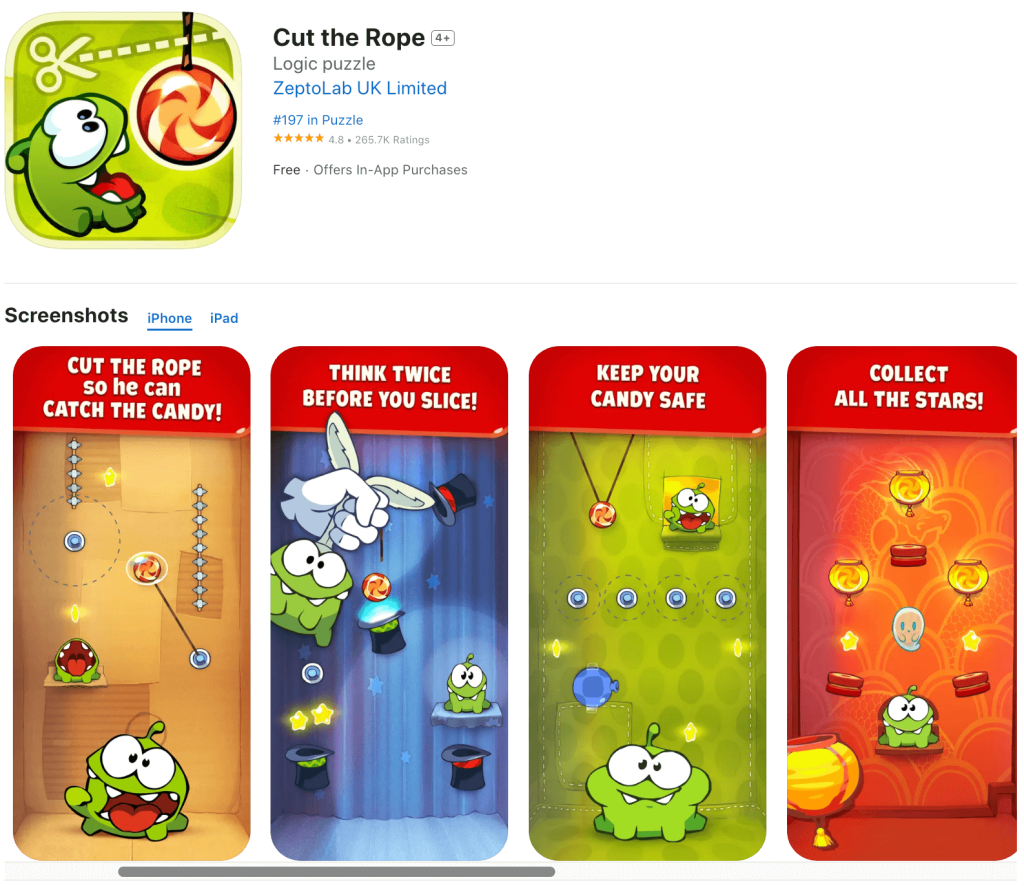
    Cut the Rope

    About the App: Starring Om Nom, a little monster with a big sweet tooth, this classic puzzle game is all about strategy. The goal? Cut the ropes at just the right moment, so Om Nom can grab his candy while collecting stars.

    Why it’s Great: Kids experiment with physics as they figure out how gravity, tension, and angles affect the candy’s path. It encourages spatial thinking and trial-and-error learning—key skills for problem-solving.

    • Recommended age: Kids & adults
    • Skills developed: Logic, spatial thinking
    • Free trial: Free with a premium version available
    • Where to download: App Store & Google Play

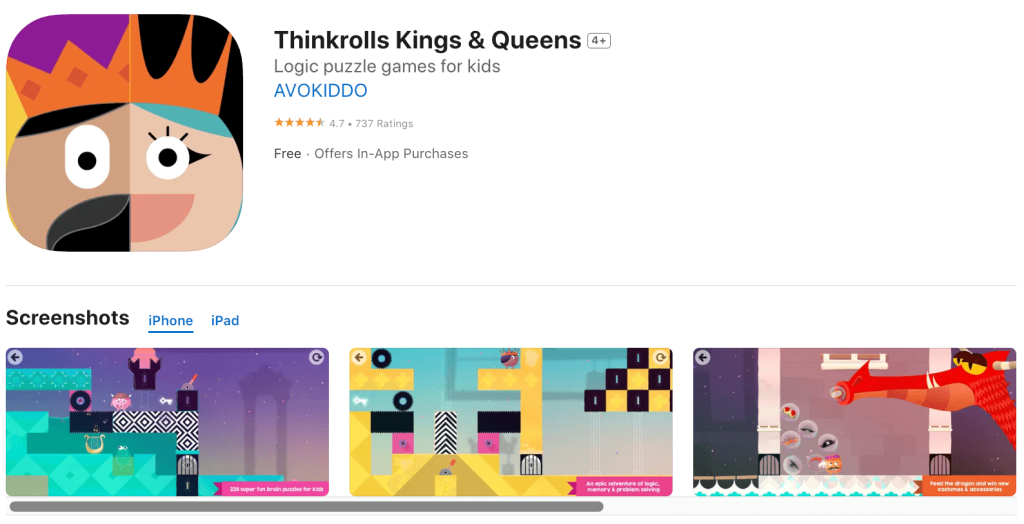
    Thinkrolls: Kings & Queens

    About the App: This puzzle-based adventure game places kids in a fairy tale world where they must use logic to navigate mazes, outsmart a dragon, and free a castle.

    Why it’s Great: Encourages logical thinking and problem-solving by incorporating puzzles that involve rolling, sliding, and navigating obstacles. Various difficulty levels allow younger kids to begin with basic puzzles, while older ones tackle more advanced challenges.

    • Recommended age: 5–10 years
    • Skills developed: Logic, spatial thinking, creativity, focus
    • Free trial: No, but there’s a free version with fewer puzzles
    • Where to download: App Store & Google Play

    2048

    About the App: This number puzzle might seem easy at first, but as kids progress, they’ll need to think carefully about every move. The goal? Reach the number 2048—but it’s not as easy as it looks!

    Why It’s Great: Kids practice strategic thinking, planning ahead, and understanding number relationships—all crucial for math fluency and analytical skills. Plus, it helps improve working memory, as players need to remember their moves and predict the outcomes.

    • Recommended age: 5+ & adults
    • Skills developed: Logic, problem-solving, focus, analytical thinking
    • Free trial: Free
    • Where to download: App Store & Google Play

    Finding the Right Balance

    Phones can be fantastic learning tools when used intentionally. Apps like these can help kids develop logic, strategy, and problem-solving skills while making learning feel like play.

    However, screen time balance is key—whether they’re gaming, chatting with friends, or watching cartoons, aim to encourage a mix of digital and offline activities for well-rounded development.

    Why not try a few of these games together? You might even boost your own brainpower in the process!

  • When You Need Help: 6 Ways to Signal for Assistance

    Время на прочтение: 3 минут(ы)

    Sometimes, people find themselves in dangerous situations where they can’t ask for help out loud. Whether it’s domestic violence, a threatening encounter, or another emergency, knowing how to discreetly signal for help can be life-saving.

    Fortunately, there are internationally recognized signals and coded phrases designed to alert others to danger—without drawing unwanted attention. Learning these signals is an essential life skill that teaches situational awareness and personal safety strategies. Here’s what you need to know.

    International Distress Signals

    The “I Need Help” Gesture

    Improvisation2021/Shutterstock.com

    This is the most well-known and easy-to-use signal:

    • Face your palm toward someone.
    • Tuck your thumb into your palm.
    • Fold your fingers down over the thumb.
    • Repeat the movement if needed.

    This gesture is widely recognized as a silent way to ask for help in situations of domestic abuse, abduction, coercion, or other emergencies. It’s particularly effective because it can be done casually in conversation, on a video call, or from a distance without arousing suspicion.

    The “Black Dot” Symbol

    Motortion Films/Shutterstock.com

    Though less commonly known, another way to signal distress is by drawing a small black dot on the palm of your hand. If you see someone displaying this mark, don’t ignore it—it may be a plea for help.

    How to Signal for Help in Public

    Ordering an “Angel Shot”

    In many American bars, asking for an “Angel Shot” is a discreet way to get help. Bartenders are trained to recognize this code and will assist by calling security, a taxi, or even the police, depending on the situation.

    Tip: If you’re ever feeling unsafe at a restaurant, bar, or event, you can also ask a staff member a question like “Can you call me a cab?” or “Where’s the manager?” as a way to seek help.

    “Ask for Angela” (UK)

    In the UK, the “Ask for Angela” initiative allows people in distress to seek help at participating bars and venues. Simply asking, “Is Angela here?” signals to staff that you need assistance—whether it’s a safe way home or emergency support.

    How to Seek Help If You’re at Home

    “Ordering a Pizza”

    In emergency situations, some people have successfully called 911 while pretending to order food. If an operator suspects distress, they may ask “Are you in danger?” to confirm.

    Tip: If you can’t talk, try pressing keys or making nonverbal noises to indicate an emergency.

    Adding a Note to a Delivery Order

    Some food delivery and ride-share apps allow users to add special instructions when placing an order. In an emergency, a discreet message like “Please call 911” can alert a driver or dispatcher.

    Emergency Hotlines in the U.S.

    Alona Siniehina/Shutterstock.com

    If you or someone you know is in danger, these resources are available 24/7:

    • National Domestic Violence Hotline: 800-799-7233 or text «START» to 88788
    • Childhelp National Child Abuse Hotline: 800-4-A-CHILD (800-422-4453)
    • National Sexual Assault Hotline (RAINN): 800-656-HOPE (800-656-4673)
    • Crisis Text Line: Text «HELLO» to 741741
    • National Human Trafficking Hotline: 888-373-7888
    • National Coalition Against Domestic Violence (NCADV): 1-303-839-1852

    What to Do If You See a Distress Signal

    If someone shows you the Signal for Help or another distress sign, it’s crucial to take it seriously—even if you’re unsure what it means.

    • Observe the situation. Are they alone? Does the person seem afraid or controlled?
    • Call 911, describe what you saw and provide as much detail as possible.
    • Stay with the person if possible. If they seem unsafe, help them move to a public place like a coffee shop, store, or police station.
    • Document evidence. If appropriate, record a video or take photos that might help law enforcement.
    • If a child signals for help, ask if they know the person they’re with. This can help determine if they’re in danger.

    Knowing these signals could save a life. Share this information with your family and friends, it’s important that everyone recognizes the silent ways people ask for help.

    Being prepared doesn’t mean living in fear—it means equipping yourself and others with the knowledge to stay safe.

  • How to Help Your Child Stay Focused: 7 Expert-Backed Tips

    Время на прочтение: 3 минут(ы)

    Staring out the window, losing focus after just 10 minutes, or zoning out over homework—these are common concerns among parents of school-age kids. So how can you help your child concentrate better? Here are seven psychologist-approved strategies.

    📝 1. Declutter the Study Space

    A cluttered workspace can make it harder for children to focus. Keep the area clean and organized, leaving only the essentials for studying. Turn off the TV, remove unnecessary toys and gadgets, and create a calm environment that promotes concentration.

    Developmental Insight: Young learners are still developing the ability to filter out distractions. A structured, distraction-free environment helps strengthen their focus over time.

    ⏳ 2. Use a Timer

    Try the Pomodoro Technique, a time-management method named after the popular tomato-shaped kitchen timer. The idea is to focus on a task for a set period, followed by a short break.

    Set a timer for 25 minutes of study, followed by a 5-minute break. Encourage movement during the break—jumping jacks, dancing to a favorite song, or a quick stretch. Switching between focused work and movement helps kids stay engaged and motivated, especially when they know there’s a time limit.

    Developmental Insight: Attention spans vary by age, but breaking tasks into manageable chunks helps children sustain focus without feeling overwhelmed. Movement-based breaks can also improve cognitive function.

    🏐 3. Change the Scenery

    Some kids struggle with sitting still for long periods, and that’s okay! If they are restless, try switching things up: review schoolwork while taking a walk or practice math problems through physical activity.

    For example, turn multiplication practice into a game: toss a ball back and forth while quizzing your child (“What’s 7×3?”), and they answer before throwing the ball back (“21!”). Learning on the move can make it more engaging. You could also try asking a math question and giving them multiple-choice answers. Assign each answer a movement (e.g., jump for A, spin for B). They answer by performing the correct movement.

    🤝 4. Make a “Contract”

    If your child frequently procrastinates or resists studying, a simple written agreement might help. Together, create a checklist of daily tasks and agree on a reward for completing them over a set period (a week or two). Write it down, sign it together, and treat it as an official contract—this makes expectations clear and adds an element of responsibility.

    Developmental Insight: Giving children some control over their study habits and incorporating positive reinforcement encourages self-motivation.

    🎯 5. Connect Learning to Hobbies

    Children are more engaged when they see how learning relates to their interests.

    • Into sports? Have them calculate player statistics for their favorite team.
    • Enjoys cooking? Let them double or halve a recipe to practice fractions.
    • Loves art? Encourage them to sketch out scenes from a history lesson.

    Developmental Insight: When learning feels meaningful, children are more likely to stay engaged. Tying schoolwork to real-life interests strengthens intrinsic motivation and helps knowledge stick.>/p>

    🕹️ 6. Play Games Together

    Games are a fun and effective way to build focus and attention skills. Try classic games like:

    • “What’s Missing?”—Place several objects in front of your child, remove one, and see if they can guess what’s missing.
    • Memory games—like “UNO,” “Spot It!” (Dobble), or digital memory apps.
    • Board games—strategy games like “Guess Who?” or “Clue” encourage concentration and problem-solving.

    Developmental Insight: Play is essential for cognitive development. Games that involve memory, strategy, and attention to detail help build the skills needed for academic focus.

    👋🏻 7. Engage Multiple Senses

    For kids who have trouble sitting still, multi-sensory activities can work wonders. Try:

    • Writing spelling words in sand or flour
    • Solving math problems on a steamed-up mirror
    • Using Play-Doh or LEGO to visualize fractions

    Developmental Insight: Multi-sensory learning engages different areas of the brain, making it easier for children to retain information. Hands-on activities can also help bridge gaps for those who struggle with traditional learning methods.

    By creating the right environment, incorporating movement, and making learning interactive, you can help your child develop focus and build better study habits—without frustration!

  • Why Is My Child Struggling in School?

    Время на прочтение: 2 минут(ы)

    “My kid won’t do homework unless I push them.” “Their grades are slipping—what should I do?” Sound familiar? Many parents worry when their child’s school performance declines. Here’s how to get to the root of the problem and help turn things around.

    Look for Changes

    Pay attention to when and how your child’s behavior at school started to shift. Lower grades can be a sign of stress, fatigue, conflicts with classmates, missed lessons, or even adjusting to a new teacher.

    Ask yourself:

    • When did the struggles begin?
    • Has anything changed at home or school?
    • Is it all subjects, or just one or two?

    Most of the time, there’s more than one reason behind academic struggles, and solving them takes time and patience.

    Talk to Your Child

    Try having a calm, open conversation. The goal isn’t to scold but to understand what’s going on. Kids often shut down when they feel judged or pressured, so frame your questions with curiosity, not frustration.

    Instead of blaming, ask questions like:

    • Which subject feels the hardest for you right now?
    • Do you feel more tired than usual?
    • Is there anything at school that’s been bothering you?
    • What part of homework do you dislike the most? The writing? The reading? The amount?
    • If you could change one thing about school, what would it be?

    Framing it this way makes it easier for kids to open up and share whether they’re feeling overwhelmed, frustrated, or unmotivated.

    Strengthen Thinking Skills

    If your child is struggling with multiple subjects, it might not just be about the material—they may need to strengthen key cognitive skills like memory, focus, and problem-solving. These skills develop over a lifetime, but in school, they directly impact confidence and success in the classroom.

    If you notice three or more of these signs, consider working on thinking skills first:

    • Struggling in three or more subjects
    • Avoids doing homework independently
    • Easily distracted
    • Skips letters when writing
    • Slow writing or frequently erasures
    • Reads without understanding the meaning
    • Has trouble summarizing texts
    • Needs topics explained multiple times
    • Lacks interest in school
    • Tires quickly during lessons
    • Gets overly upset over mistakes

    Key thinking skills for school success:

    • Focus (staying attentive in class)
    • Emotional Regulation (not freezing up when called on)
    • Verbal Logic (participating in class discussions)
    • Memory (memorizing multiplication tables, poems, and facts)
    • Information Processing (understanding what they read, connecting ideas, writing their own thoughts)

    Rather than drilling schoolwork, focus on games and daily tasks that build the cognitive abilities above:

    • Focus — Try timed “beat the clock” challenges for homework
    • Emotional Regulation — Role-play classroom situations and practice handling frustration.
    • Verbal Logic — Discuss stories, play word association games, or debate silly topics.
    • Memory — Play matching games, recall sequences, or practice storytelling.
    • Information Processing — Use quick-thinking games like “20 Questions” or charades.

    Create a Positive Learning Environment

    A struggling child needs encouragement, not pressure. Celebrate small wins and focus on effort, not just results:

    •  Instead of: “Why didn’t you get an A?”
    •  Try: “I noticed you really stuck with that tricky problem—I love your perseverance!”

    Confidence grows when kids feel capable, supported, and understood. With the right approach, they’ll start believing in their own abilities.

  • How to Learn Multiplication Tables: 7 Fun and Easy Ways

    Время на прочтение: 3 минут(ы)

    Learning multiplication tables can be tricky, but the right approach can make it fun, engaging, and much less stressful. Here are seven tried-and-true strategies to help your child master multiplication.

    1. Hang Up a Chart

    mentalmind/Shutterstock.com

    Want to remember something? Keep it in sight! A colorful multiplication chart on the fridge, study desk, or even in the bathroom (hey, why not?) reinforces learning through constant, effortless exposure.

    Better yet, get your child involved! Let them decorate the chart with stickers or doodles. Psychologists call this the “generation effect”—when kids create or personalize something themselves, they’re more likely to remember it. The more personal it feels, the more motivated they’ll be to use it.

    2. Use Flashcards

    Make simple flashcards with problems on one side (like 6 × 7) and answers on the back (42). Kids love games, so turn it into a challenge: who can solve the most flashcards in a minute?

    Bonus tip: Use them on car rides or while waiting in line to sneak in some practice time. Spaced repetition, or reviewing small bits of information at different times, is a proven memory booster.

    3. Add Some Music

    Songs and rhymes work wonders for memorization. Think about it—how many lyrics do you remember without even trying? That’s because music taps into auditory memory, making information easier to recall.

    Find multiplication songs on YouTube and play them during car rides, playtime, or even chores. Before you know it, your child will be singing their way through math class.

    4. Turn It Into a Treasure Hunt

    Movement enhances cognitive processing, which means kids learn better when they’re active. So, why not turn multiplication into an adventure?

    Write problems on slips of paper and hide them around the house. Each correct answer leads to the next clue. Want to add a little movement? Throw in a few challenges—“Do three jumping jacks before solving the next one!” These little bursts of activity help improve focus and retention.

    5. Connect It to Real Life

    Alex LM/Shutterstock.com

    Math makes way more sense when kids see how it applies to everyday life. Instead of abstract equations, bring math into everyday moments:

    • “If we buy 3 packs of cookies with 4 in each, how many do we get?”
    • “If you high-five 5 friends twice, how many high-fives is that?” (Hint: 10!)

    By linking math to real situations, kids engage in active learning, making concepts stick naturally.

    6. Try Learning Apps & Games

    Digital learning isn’t just fun—it provides instant feedback, which is one of the best ways to improve retention. There are plenty of great apps where multiplication is part of an adventure, like solving problems to unlock rewards or level up a character.

    For kids who love screen time, these apps turn practice into play—without it feeling like extra homework. Let the tablet work in your favor for once!

    7. Keep It Short & Sweet

    A little practice every day goes a long way. Instead of long, frustrating study sessions, set aside 10–15 minutes daily for a quick review session. And don’t forget to celebrate the wins! Even small successes deserve a high-five, a sticker, or even a cookie. A little encouragement builds confidence and makes kids want to keep going.

    The best way to help your child master multiplication is to keep things playful and engaging. Try different methods, mix and match, and find what works best. Before you know it, they’ll be multiplying like a pro!

  • “Difficult” Teen: How Should Parents Respond?

    Время на прочтение: 3 минут(ы)

    The teenage years mark the transition from childhood to adulthood. But why do teens often become “difficult”? How can parents support their child through this challenging phase while maintaining a strong, trusting relationship?

    😣 Why Does a Teenager Become “Difficult”?

    Let’s start with the most important thing: adolescence is not a “bad” or “troubled” stage of development—it’s a critical phase of identity formation. Many assume that teenagers change only because of bad influences, social media, or teen hormones. In reality, the underlying reasons go much deeper:

    1. Identity Crisis: Teenagers are actively exploring who they are, what they value, and where they fit in the world. This often comes with a pushback against parental control as they assert their independence.
    2. Conflicting Interests: Teens want more freedom while still relying on family structure, creating tension when they feel restricted or unheard.
    3. Emotional Rollercoaster: Teenagers experience a whirlwind of emotions, and their hormonal changes affect their self-esteem and reactions to outside factors. Their feelings can be more intense, and their responses may seem unpredictable.
    4. Psychological Pressure: The need for peer acceptance is intense, and conflicts arise when parents don’t acknowledge the importance of social belonging.

    🤯 What Should Parents Do When Their Teen Is Being “Difficult”?

    During this period, it’s crucial not just to be present, but to respond in ways that nurture communication and respect.

    Here are a few recommendations to help establish a better connection with your teenager.

    Be Patient and Keep the Conversation Going

    Give your teen the space to express their thoughts and emotions, even if they seem irrelevant or exaggerated. Active listening—without immediate correction or dismissal—shows them that their feelings matter. Often, what appears as “difficult” behavior is actually a bid for connection and understanding.

    Set Boundaries, but Avoid Becoming Controlling

    Teenagers resist being micromanaged, but they still need structure. Set clear, consistent boundaries and explain their purpose. Involving teens in discussions about rules fosters mutual respect and encourages cooperation.

    Provide Choices

    As teens seek independence, providing opportunities for decision-making can be empowering. Allowing them to make age-appropriate choices—like managing their schedule, choosing a family activity, or budgeting for a new gadget—helps them develop responsibility.

    Spend Time Together

    Shared interests and activities—like sports, movie nights, or walks—help strengthen the bond between you and your teen. Even if they seem uninterested at times, these moments reinforce your presence and support.

    Listen Without Judging

    When your teen opens up about their feelings, listen without jumping to conclusions or criticism. Creating a non-judgmental space fosters trust, making them more likely to turn to you in difficult situations..

    Don’t Respond to Aggression with Anger

    Teenagers may lash out verbally or emotionally, but meeting aggression with anger only escalates conflict. Staying composed models emotional regulation and helps de-escalate tense situations.

    Don’t Ignore Red Flags

    If you notice significant changes in your teen’s behavior—like excessive withdrawal, aggression, or loss of interest in school—it may be time to seek help from a psychologist or counselor. Early intervention can provide valuable support.

    🔴 Should You Punish a “Difficult” Teenager?

    Punishment is rarely effective and often leads to rebellion, resentment, or a breakdown in communication. However, appropriate consequences help reinforce accountability.

    • Make Consequences Logical and Fair: Instead of arbitrary punishments, link consequences to the behavior. If they break something, they help repair or replace it. If they’re rude, they make amends through an apology or an act of kindness.
    • Allow Room for Mistakes: Adolescence is a learning stage. Giving teens space to make errors—while ensuring they experience the natural consequences—teaches responsibility without damaging trust.

    Ultimately, maintaining a balance between structure and understanding is key. A teenager’s push for independence isn’t a rejection of their parents—it’s part of growing up. By responding with patience, respect, and guidance, parents can help their teens navigate this complex stage while strengthening their relationship.

    References:

    1. 7 Keys to Handling Difficult Teenagers. Psychology Today
    2. Help for Parents of Troubled Teens. Help Guide
  • The Truth About “Difficult” Kids

    Время на прочтение: 3 минут(ы)

    A child who throws tantrums in public, ignores the teacher, and regularly tests their parents’ patience is often labeled as “difficult.” People sigh and wait for them to “grow out of it,” but is it always just a matter of their personality or character?

    😣 Who Are the “Difficult” Kids?

    Children typically get this label when they struggle to meet expectations—whether because they can’t or simply don’t want to. They protest, disobey, and look for ways to make their voices heard.

    Grown-ups may even call them “inconvenient” because managing these behaviors can be draining, especially when they express their dissatisfaction loudly when things don’t go their way.

    From a psychological standpoint, so-called “difficult” behavior often masks deeper emotional needs or insecurities. Acting out can be a child’s way of saying, “Notice me,” “I feel powerless,” or “I’m anxious and don’t know what to do.” Rather than dismissing such behavior, it helps to understand the root causes.

    🐣 Why Do Kids Become “Difficult”?

    All behavior happens for a reason. Several parenting approaches and developmental factors can influence how children respond to rules and boundaries:

    1. Parenting Approaches:
      • Authoritarian Parenting: Constant restrictions and prohibitions without explanations can spark rebellion.
      • Permissiveness: When there are no clear boundaries, it creates confusion, leaving both the parent and child without support.
      • Lack of Structure: “No today, but yes tomorrow” — inconsistency can be confusing and lead to boundary testing.
      • Parental Example: When parents resolve conflicts in a calm and deliberate way, they set a powerful example for their children to follow.
    2. Relationship with Parents: Children don’t always realize they’re craving attention. Instead, they “shout” through their behavior: tantrums, aggression, or withdrawal.
    3. Developmental Crises:
      • At age 3, children test boundaries as they assert their independence.
      • By ages 6–7, they learn how to be part of a community.
      • During adolescence, they’re often figuring out their place in the world—sometimes through protest.
    4. Physiology: Hyperactivity, developmental differences, stress, and chronic fatigue can all affect a child’s behavior. Sometimes, poor behavior simply comes from a lack of sleep, overload, or anxiety they don’t know how to handle.

    🤯 How to Respond to “Difficult” Behavior

    Parents should remember that a child doesn’t become stubborn or moody overnight, and they can be reasoned with. Here are some ways to help:

    • Set Clear Rules: “No” and “yes” should be consistent and easy to understand.
    • Listen to Your Child: Have you noticed how hard it is for kids to express their feelings? Teach them how: “Are you angry? Let’s talk about it.”
    • Lead by Example: Calmness, respect for others, and keeping promises—children learn these habits from adults.
    • Use Praise: Acknowledge when your child does something right and offer positive feedback.

    When a child misbehaves, punishment is rarely effective. Instead, it’s more beneficial to help them understand the consequences of their actions. The goal isn’t to forbid behavior arbitrarily, but to guide them toward taking responsibility and making better choices.

    When is this especially important?

    • When a child knowingly breaks the rules after being warned about the consequences. This suggests they are testing boundaries and need consistent follow-through.
    • For younger children (under 6–7 years old), when reinforcing the importance of boundaries. At this stage, children are still learning self-regulation, so clear, predictable limits help them feel secure.
    • When they show aggression toward others. Teaching alternative ways to express frustration or resolve conflict is essential for social development.
    • When they intentionally damage property. Helping them understand the impact of their actions fosters accountability and problem-solving skills.

    It’s especially important not to punish if the child did something unintentionally or broke the rules without understanding the consequences, or if their actions are tied to developmental crisis or physiological factors.

    Instead of shouting or sending them to a corner, try:

    • Short “Time-Outs” (a moment alone to calm down).
    • Temporary limits on device use.
    • Joint discussions about the behavior—calmly talking it through and finding solutions together.

    And remember: punishment only makes sense if it’s fair and comes with an explanation.

    💙 The Key is Love

    Even the most disobedient child wants to know they are loved. Psychologists agree that behavior improves faster when parents show acceptance and unconditional love.

    Don’t forget to hug your children, talk to them, and pay attention to their successes. After all, you are their rock in this world!

    References:

    1. The Best Advice Real Parents Have for Raising Difficult Kids. Parents.com
    2. Managing a Hyperactive/Difficult Child: Parent Tips, Coping. Psychology Today
  • 6 Ways to Spark Your Child’s Interest in Learning

    Время на прочтение: 2 минут(ы)

    When a child loses interest in school, it’s not always laziness or stubbornness. They might be tired, struggling to grasp the material, or falling behind because of social challenges. Each situation calls for a different approach, so it’s important to first understand the root cause by talking with your child.

    In this article, we’ll explore ways to support your child, minimize distractions, and help them overcome resistance to learning.

    ⏰ 1. Set a Daily Routine

    Children thrive on structure, so having a consistent schedule—including time for sleep, play, study, and relaxation—helps them know what to expect. A predictable routine also makes it easier for them to transition between activities.

    However, don’t overwhelm them. If they’re exhausted after practice, it’s better to postpone homework and come back to it later. Also, be sure to include time for family bonding—whether it’s a shared dinner or reading together before bed.

    📚 2. Create a Comfortable Study Space

    Your child’s study area should be comfortable and free from distractions. Clear away gadgets and leave only the essential supplies materials, like colorful pens, sticky notes, and notebooks.

    You can even turn shopping for school supplies into an opportunity to build independence. Let your child choose what they need, read reviews, and add items to their cart online—just be sure to set a budget to teach responsible decision-making.

    ⚖️ 3. Give Your Child Some Choices

    Allowing your child to make small decisions—such as which subject to start with or the order of their assignments—can reduce resistance and encourage independence. This sense of control helps them feel more capable and independent. Over time, it will also teach them how to manage their workload and prioritize tasks.

    💁 4. Show the Practical Benefits of Learning

    Instead of focusing solely on grades, emphasize the real-world applications of what your child is learning. Discuss why they’re important. For example, math is useful in everyday life, such as counting change at the store or managing pocket money. When kids see the relevance of what they’re learning, schoolwork becomes less of a chore.

    ⏳ 5. Use Deadlines

    Our brains tend to use up all the time we have available for a task, no matter how much time is given. The more time we have, the slower we might go. So, break homework down into smaller chunks, especially for younger students. Assign a reasonable amount of time for each task—say, 20 minutes to complete an exercise.

    After 20–30 minutes of focused work, give them a 5–7 minute break—dance, play ball, or simply stretch—but try to avoid distractions like gadgets or TV shows during these breaks.

    🤝 6. Offer Support

    Your child might avoid schoolwork because they fear making mistakes. Remind them that mistakes are part of the learning process. Sharing your own experiences with challenges can help normalize setbacks and encourage perseverance.

    Praise your child for their effort, not just the results. Instead of saying, “Why didn’t you get an A?” try, “I see how hard you worked. That’s awesome!” Your support will boost their confidence, and they’ll be motivated to try again.

    (далее…)

  • 10 Parenting Hacks for Raising a 9-Year-Old Girl

    Время на прочтение: 4 минут(ы)

    By age 9, girls are developing their creativity, learning to build friendships, and forming their own perspective on the world. Research in developmental psychology indicates that middle childhood (ages 6–12) is a critical period for developing self-concept, peer relationships, and creative expression, all of which lay the groundwork for healthy adolescent identity formation.

    But growing up comes with challenges, and kids don’t always have the answers on their own. How can you help your daughter grow into a confident and happy young person? Here are some key strategies.

    🧘🏻‍♀️ 1. Be a Role Model for Healthy Self-Respect

    Show your daughter how to respect and care for herself by demonstrating it in your own life. If you’re always putting yourself down or having a hard time accepting your body, chances are she’ll pick up on that and do the same. Research has consistently shown that parental modelling—especially from mothers—is a powerful predictor of girls’ body image and self-esteem development in middle childhood. When parents display self-compassion and positive body attitudes, daughters are more likely to adopt similar views of themselves.

    Tip: If you practice self-care habits like yoga, meditation, or morning stretches, invite your daughter to join you! Shared activities strengthen your bond and will help her develop a positive relationship with her body and mind from an early age.

    🌸 2. Allow Her to Be Herself and Make Choices

    Your daughter doesn’t have to be “quiet,” “obedient,” or “sweet” all the time. Give her space to experiment and make her own decisions—whether it’s choosing after-school activities, picking out her clothes, or deciding how to spend her free time. This will help her feel empowered.

    Tip: Nine-year-old girls are starting to become more aware of what others think, and they might hold back from sharing their interests if they’re worried about being judged. Show genuine interest in whatever she loves—whether it’s space, slime, or writing stories—so she knows her passions are valued.

    🥹 3. Talk About Emotions

    At this age, girls experience a whirlwind of emotions but may not always know how to express them. Emotional competence—understanding, expressing, and regulating emotions—is strongly linked to positive peer relationships and psychological well-being in middle childhood. Creating a safe space to talk about feelings helps girls develop these essential emotional skills.

    Tip: Help her recognize and navigate her feelings by creating an “emotion chart” together—draw different emotions and discuss when and why she feels them. Most importantly, remind her that all emotions are valid, and she never needs to feel ashamed of them.

    🚫 4. Teach Her to Say “No”

    This is a crucial skill that will protect her in the future. Talk about situations where she might face peer pressure and help her practice confident ways to say no.

    Mom’s tip: “My daughter and I do little role-play games where I pretend to offer her something she’s not allowed, and she practises saying no clearly and confidently.”

    🚩 5. Establish Personal Boundaries

    Introduce your daughter to body safety and the “underwear rule,” which explains that any part of the body covered by underwear is private and belongs to her. But it’s also important to help her understand that some unsafe touch might not involve private parts at all—for example, someone might try to push boundaries through tickling, roughhousing, or asking her to keep secrets.

    Tip: The key message is that her body belongs to her. She can say “no” to anything that makes her uncomfortable, and she should always tell you (or another trusted adult) if something doesn’t feel right.

    ♀️ 6. Show Her the Power of Women in Society

    This is a great age to start talking about gender stereotypes and inspiring her with stories of women who have changed the world. Show your daughter that she can be anything—a scientist, a pilot, an artist, or an athlete. Developmental psychologists have found that exposure to diverse role models can significantly broaden children’s career aspirations and reduce internalised gender stereotypes, particularly in late childhood.

    Real-life moment: “We watched a documentary about the first female astronaut together, and now my daughter dreams of becoming an astrophysicist.

    🏃🏻‍♀️ 7. Encourage Physical Activity

    At this age, many girls become less active due to self-consciousness. Help her find a sport or activity she enjoys—dance, hiking, biking, or even boxing or karate. Forget outdated gender stereotypes! The most important thing is that she stays active in a way that makes her happy.

    Tip: Let her try a few different activities to see what she enjoys most, and focus on fun rather than performance. When girls feel supported to move their bodies in ways that feel good—rather than being judged on skill or appearance—they’re more likely to stay active long-term.

    💭 8. Share Your Own Stories

    Tell her what you were like at her age—what you feared, what you loved, what you struggled with. This builds trust and reassures her that you truly understand what she’s going through.

    Tip: Be honest, even about the awkward or embarrassing moments—hearing that you also felt unsure or made mistakes helps her see that it’s normal to feel that way sometimes, and that she doesn’t have to be perfect.

    💳 9. Teach Financial Responsibility

    Some parents avoid discussing money with their kids, but by age 9, children can start learning how to manage finances. Cognitive development research shows that children begin developing foundational money skills—including understanding saving, spending, and delayed gratification—by middle childhood

    Tip: Give your daughter a small weekly allowance and discuss different ways she can spend or save it. This helps build financial literacy early on.

    🗣️ 10. Talk About Tough Topics

    Make sure your daughter knows she can ask you anything. Discuss friendships, bullying, emotions, and the physical changes she’ll soon experience. Open parent-child communication has been linked to lower anxiety, better coping skills, and greater resilience during transitions like puberty.

    Mom’s tip:“Once a week, my daughter and I have a ‘question time.’ She can ask me anything, and I answer honestly.”

    💙 The Most Important Thing—Be There for Her

    Support your daughter, respect her opinions, and be the person she knows she can always turn to for advice. At nine years old, she is just at the beginning of a long journey where she’ll discover who she is—and having you by her side will make all the difference.

    References:

    1. Positive Parenting Tips: Middle Childhood (9–11 years old). Cdc.gov
    2. 7 Tips For Effective Communication With Your School-aged Child. Mentalhealth.com
    3. Have you talked PANTS yet? nspcc.org.uk
    4. Body image and mental health. mentalhealth.org.uk
    5. Flirting with resistance: children’s expressions of autonomy during middle childhood. National Library of Medicine 

    Cover image: A.Ozerova/Shutterstock