Рубрика: Parenting Checklist

  • How to Respond to a Teen’s Rudeness: 5 Phrases

    Время на прочтение: 2 минут(ы)

    Teenagers can be blunt, harsh, or even hurtful: “Leave me alone!”, “You’re ruining my life!”, “It’s my life—stay out of it!”

    Words like these sting. And it’s only natural to want to defend yourself, reassert boundaries, or respond in kind. But when adults react emotionally, things can escalate quickly.

    Imagine this: you’re sitting by a fire. Your teen throws dry branches into it, and the flames flare up. You’re holding branches, too. Will you toss them in? Or wait for the fire to die down?

    In moments like this, remember—it’s not personal but more likely that they are feeling overwhelmed, and choosing not to react immediately is powerful.

    Here are five phrases that can help you respond to rudeness without saying something you’ll both regret:

    🗣 1. “You seem really upset. Let’s try to figure out what’s behind that.” 

    This doesn’t excuse the behavior, but it invites reflection, helping your teen notice what’s really going on.

    🗣 2. “Sounds like something’s been building up. Want to talk about it?” 

    This helps shift the focus from how things are said to what’s being said—from tone to meaning.

    🗣 3. “It really hurts when we talk to each other like this. Can we think of a kinder way to say it?” 

    A soft reminder of emotional boundaries—and a gentle invitation to reconnect, without punishment or pressure.

    🗣 4. “Seems like you’re having a hard time right now. I’m here if you feel like talking.” 

    This shows support while still respecting their need for space. You’re present but not pushy.

    🗣 5. “Maybe now isn’t the best time. Let’s come back to this when we’re both ready to talk calmly.” 

    You’re not walking away from the conversation—just pressing pause until it’s a better time.

    These phrases work best when you stay calm, which isn’t always easy, especially when emotions run high. But it’s the adult who sets the tone. Consistency matters: staying grounded today and yelling tomorrow sends mixed signals. The fewer “branches” we throw into the fire, the sooner it fades.

    Taking a pause, validating their feelings, responding with calm, and choosing respectful communication—that’s not weakness. It’s the strength of a steady adult, modeling how to manage tough emotions.

    And when that happens, you’re not just avoiding conflict—you’re building trust. Together.

    References:

    Cover image: fizkes/Shutterstock

  • How to Respond to Rudeness: 5 Phrases

    Время на прочтение: 2 минут(ы)

    Kids this age can be rude or snap at their parents: “Leave me alone!”, “I’m not doing that!”, “You’re the worst parent ever!” Words like that can really hurt—and the first impulse might be to snap back, defend yourself, or prove your point. But when a parent reacts emotionally, things can escalate quickly.

    Picture this: you’re sitting by a fire, and your child throws dry sticks into the flames—it flares up instantly. You’re holding sticks, too. Do you add them? Or wait and let the fire die down on its own?

    In moments like these, staying calm and reminding yourself it’s not personal but likely a result of feeling overwhelmed makes all the difference. A short pause and a few thoughtful words can show your child that you’re still there and ready to talk.

    Here are five phrases that can help you respond to rudeness without turning it into a conflict:

    🗣 1. “You must be really angry to talk to me like that.”

    This phrase helps your child become aware of their emotions and how they express them. You’re not justifying the rudeness—you’re showing that you notice something’s hard for them right now.

    🗣 2. “It hurts when you talk to me like that. Can we think of a kinder way to say this?”

    A gentle reminder about boundaries, and an invitation to try again—no punishment, no pressure.

    🗣 3. “Sounds like a lot is building up. Want to figure it out together?”

    Instead of focusing on how your child said something, this shifts attention to what they’re trying to say. It shows that you’re open to listening and helping, without feeding the conflict.

    🗣 4. “It’s okay to feel angry. I’m here—even if you don’t feel like talking right now. Do you want to hit a pillow or something?”

    This helps your child separate feelings from actions. Anger is okay—and they’re still accepted, even when they’re upset.

    🗣 5. “Maybe now’s not the best time to talk. Let’s come back to this later.”

    Sometimes, a pause is the best way to give everyone time to cool off and avoid a full-blown argument.

    These phrases work best when you stay calm, which isn’t always easy. And they may not have an immediate effect. Every situation is different. But how we, as adults, respond sets the tone for communication. The fewer “sticks” you throw into the fire, the sooner it goes out.

    A pause, a steady voice, a thoughtful response—that’s not weakness. That’s strength. The kind that helps you stay connected, even when emotions run high. You’re not “losing”—you’re showing your child how to handle big feelings. And that’s a win for both of you.

    References:

  • Your 7–11-Year-Old Talks Back and Argues — What’s Going On?

    Время на прочтение: 2 минут(ы)

    Between the ages of 7 and 11, kids start gaining more independence. They begin navigating not just family rules, but also school and social expectations. If your child is suddenly pushing boundaries or being defiant, it’s not a sign that something is “wrong”—it’s their way of figuring out how consistent and reliable the adults around them are. In other words, they’re testing boundaries and exploring their connection with you.

    🚷 Why Kids Test Boundaries

    Children in this age range are no longer little kids, but not quite tweens either. They begin taking risks, breaking small rules, arguing more, and trying things their own way. At the same time, they still deeply need their parents’ love and presence.

    What may seem like defiance is often a way of asking, “Will Mom still love me if I mess up?”

    Boundary-testing helps a child feel secure. It’s their way of checking whether they’re still safe and accepted, even when they’re not perfect. It’s an essential part of building self-esteem and emotional resilience.

    🤭 How Boundary Testing Shows Up

    Every child does this a little differently. Some examples:

    • They argue back: “Why should I?”—and closely watch how you respond
    • They “forget” the rules: “Oops, I didn’t know…”
    • They do the opposite of what you asked, just to see what happens
    • They ask why others can do something, but they can’t
    • They procrastinate or pretend they’re tired: “I’ll do it later” or “In a minute…”
    • They ignore your requests or pretend not to hear
    • They compare you to other adults

    And sometimes, they’ll slam a door, talk back, or dig in their heels. All of this is developmentally normal. At this age, your child is starting to understand that they’re their own person—distinct from you as their parent.

    🧘🏻 How to Respond as a Parent

    When a child argues, gets upset, or pushes your buttons, they’re not being manipulative—they’re trying to cope with something that feels difficult or confusing.

    As a parent, your role is to stay calm and steady. You don’t need to control everything, but your child still needs to feel that you’re in charge and that you care.

    What can help:

    • Stay calm. You don’t have to be right all the time—you just need to be a safe, steady adult.
    • Acknowledge your child’s feelings, while gently reinforcing the rule: “I can see you’re upset. But the rule still stands.”
    • Separate wants from needs. You don’t have to give in, but you also don’t have to ignore their emotions.
    • Offer choices within limits. Instead of “Do this now”, try: “Would you rather do it now or after dinner?”

    Your child isn’t acting out because they’re “bad”—they’re growing up. And the more calmly and clearly you can hold the line—without fear, without anger, and without giving up—the more your child learns that they can rely on you, no matter what. And that’s how confidence grows.

    References:

  • Why Is My Teen So Distant and Disrespectful?

    Время на прочтение: 2 минут(ы)

    The teenage years are a time of intense internal change. Everything is shifting—body, emotions, thinking. To figure out who they are, teens need distance—physically and emotionally. And sometimes, that means conflict, arguing, and pushing people away.

    Testing boundaries isn’t about destroying your relationship. It’s their way of finding a sense of stability inside themselves.

    🤦‍♀️ Why Teens Start Acting This Way

    The teenage brain is still developing—especially the prefrontal cortex, which helps with self-control, planning, and thinking before acting. That’s why your teen may snap, lash out, or get angry fast.

    It’s not that they don’t love you. It’s just that their brain can’t always hit the brakes when emotions take over.

    Now add hormonal changes, adolescent egocentrism (where teens feel everyone is looking at and judging them), social pressure, and a deep need to understand who they are—and you’ve got a young person who’s desperate to figure out their identity, limits, and who they can really rely on.

    🚷 How Teens Test Boundaries

    Boundary-testing in teens can look very different from one day to the next. Sometimes it’s an open argument. Other times, silence.

    But behind that sharpness, there’s often a hidden question: “Will you still be there for me—even if I’m not who you want me to be at this moment?”

    How it can show up:

    • Arguing or insisting on their point of view—often with sarcasm or rule-breaking
    • Withdrawing, ignoring, shutting down
    • Breaking agreements—coming home late, forgetting promises and commitments
    • Acting out—skipping school, showing up late on purpose
    • Publicly distancing themselves from you
    • Trying out new looks, habits, and friend groups

    💪 What Can Help You as a Parent

    Adolescence is a time of separation—from parents emotionally, mentally, and sometimes physically. At the heart of it is this question: “Do you love me, even when I’m not easy to love?”

    Your job isn’t to win the argument—it’s to protect the relationship. Teens who feel safe and supported are better equipped to make healthy decisions during this intense period. They are also more likely to have higher self-confidence because they feel more comfortable “in their own skin”.

    What helps most is being the adult your teen can lean on:

    • Don’t focus on being “right”—focus on being present
    • Offer choices, not ultimatums
    • Ask open-ended questions and be willing to hear hard answers
    • Know the difference between boundaries and control
    • Respect their need for space—but stay emotionally close
    • Stay calm, even when emotions get messy
    • Keep the connection alive, even when they pull away
    • Don’t turn every conversation into a lecture
    • Avoid guilt, manipulation, and yelling

    You don’t have to agree with everything. You don’t even have to approve. But your teen needs to know they’re heard. And when you can say “I love you, even when I’m angry”, you’re giving them something powerful: a foundation that lasts.

    Testing boundaries doesn’t mean your teen is drifting away—it means they’re trying to find their way. Your steadiness, calmness, and love are what help them through. And if it feels like too much sometimes, reaching out to a therapist can be a great next step—for you or your teen.

    References:

  • Not Listening Again? 5 Common Discipline Mistakes

    Время на прочтение: 3 минут(ы)

    Your child isn’t listening? There could be many reasons, but in many cases, it comes down to how discipline is handled. Let’s look at some common parenting mistakes that might make it harder for your child to hear you out, make better choices, and follow through.

    🤔 1. Inconsistency

    One day, there’s one rule. The next day—it changes. Or the rule stays the same, but parents break it themselves.

    When rules are changed or canceled without explanation, it’s hard for a child to understand what’s expected. Rules start to feel random or temporary—so there’s no compelling reason to follow them.

    What can help: Set clear, fair, and consistent rules. If something needs to change, talk about it together and explain why.

    🗣️ 2. Yelling and Threats

    Sometimes, when we feel overwhelmed or lose control, we resort to yelling or issuing threats to make our child behave.

    But yelling isn’t a tool—it’s an emotional outburst. It can frighten a child and undermine their ability to understand what went wrong.

    Threats have a similar effect. They create anxiety and fear of losing love and support, but don’t teach responsibility.

    Sure, yelling or saying, “If you ever do that again…” might work in the moment. But it won’t help long-term—and it can damage your connection with your child.

    What can help: Stay calm but firm. Instead of yelling, say just a few words. Instead of threatening, use natural consequences. For example: “If you don’t turn off the tablet now, there won’t be enough time to play before dinner.”

    🖼 3. Lack of Boundaries

    Gentle parenting is growing in popularity—fewer punishments, no harsh rules, more respect and communication.

    But if a child decides on their own bedtime, whether to do chores, or how to speak to adults—that’s not gentle parenting anymore. That’s being overly permissive and stepping away from your role as a parent.

    Kids need, and actually want, boundaries. Boundaries help them feel safe and learn what’s okay and what’s not. Without boundaries, kids get confused and test limits on their own.

    What can help: Create clear rules and stick to them. For example: “You can choose what to play, but at 9:00 p.m., we’re done for the day—you have school tomorrow.” Boundaries help kids feel safe and develop self-control.

    👿 4. Public Discipline

    Making a comment in front of grandma or friends might feel harmless, but it can actually hurt your child’s self-esteem.

    They might feel ashamed, embarrassed, and stop listening altogether. What could be a moment of learning turns into a mile of distance.

    What can help: Talk things through privately. Even if you’re angry, try to respect your child’s emotional space.

    🤝 5. Little Meaningful Dialogue

    Saying “Because I said so” doesn’t teach discipline or build trust. If kids can’t discuss the rules, they don’t understand their purpose—so they don’t see why they should follow them.

    What can help: Involve your child in the conversation. Ask what they think. It doesn’t mean giving in—it means showing that their opinion matters. When a child understands the “why” behind a rule, they’re more likely to follow it with intention.

    We’re all learning how to be parents—growing along with our kids and making mistakes along the way.

    Helping your child listen often means building stronger discipline practices. But discipline isn’t about perfect rules—it’s about trust, flexibility, and respect.

    In future posts, we’ll share more reasons why your child might not be responding—and what can help. And remember: if something’s not working, it doesn’t mean you’re doing it wrong. It just means there’s another way. And you’ve got this.

    References:

  • Emotional Intelligence Helps Kids Lie Less

    Время на прочтение: 3 минут(ы)

    Kids who can understand the feelings of others are less likely to lie. That’s the conclusion reached by the authors of a study published in the Journal of Experimental Child Psychology in 2024. This has to do with a child’s ability to imagine how a lie might affect someone else. This skill is called cognitive empathy—and it can be developed.

    🤗 What Is Cognitive Empathy and How Does It Work?

    Cognitive empathy is the ability to think about and understand what another person is feeling and to imagine yourself in their place. It’s not just about feeling sorry for someone—it’s about seeing the situation through their eyes.

    For example, if your child tells you they were hurt by someone, cognitive empathy helps you not only feel their pain but also understand why they’re reacting that way.

    Sometimes, cognitive empathy is confused with emotional empathy. Emotional empathy is the ability to feel what someone else is feeling—to “catch” their emotions, so to speak. For example, when your child is crying, you might feel sad too or even start crying with them.

    Both types of empathy are important, but it’s cognitive empathy that helps kids understand the consequences of their actions—and that’s what makes them lie less often.

    🤥 ‍Why Kids With Empathy Are Less Likely to Lie

    As kids develop empathy, they start to realize that lying can hurt others or lead to problems. And that becomes important to them.

    Carol Brady, PhD in clinical psychology from Walden University, recommends talking to kids in a way that helps them feel safe being honest—and reminding them that they don’t have to be perfect all the time.

    You can say something like: “I’m going to ask you something, and maybe you’ll tell me something I won’t like very much. But remember: what you do doesn’t change how much I love you. I love you no matter what, and everyone makes mistakes. That’s why I want you to think carefully and give me an honest answer.”

    When you give your child space to reflect on these words, they’re more likely to tell you the truth.

    Keep reminding your child that you love them no matter what—and create an environment where they don’t feel afraid to be honest.

    💙 How to Help Your Kid Develop Empathy

    The skill of cognitive empathy develops with age and involves the prefrontal cortex—the part of the brain responsible for complex thinking. Cognitive empathy is one of the things that still sets us apart from robots (for now!).

    Here’s what can help your child better understand others:

    • Work on emotional intelligence. This is the ability to understand and manage our emotions, as well as recognize and respond appropriately to the emotions of others. It is closely connected to cognitive empathy.
    • Books and programs that teach kids to recognize and understand their own emotions—and the emotions of others—can help strengthen this skill.
    • Read fiction. Immersing themselves in stories and characters helps kids see the world through different eyes in a variety of situations—and that builds empathy. You can read to your child if younger, or read the same book as your older child or teen, and then have discussions to expand their empathy skills.
    • Practice active listening. Learning to listen carefully and ask clarifying questions helps kids understand others’ thoughts and feelings better. Empathy is a key component of active listening as it promotes deeper connections, understanding, and effective communication. When parents model active listening, it becomes easier for kids to figure out their feelings, too.

    Want to give these tips a try? At Findmykids, we believe you’ve got this—and we’re here to support you every step of the way. And if not right away—that’s okay. Cognitive empathy takes time to develop.

    References:

    Cover image: Alex Uksta/Shutterstock

  • Why 7–9-Year-Olds Lie—and What You Can Do About It

    Время на прочтение: 3 минут(ы)

    You might have noticed that younger kids often fantasize and mix up what’s real and imagined. They still have limited cognitive development in distinguishing between truth and fiction. This can show up as something they want to be true and something that actually happened, or doing something wrong but wishing they hadn’t.

    As they mature—around ages 7 to 9—lying starts to take on a different meaning. At this age, kids already understand what honesty is, but sometimes they still choose not to share something or to make up a lie. In this article, we explore why this happens and how to support your child in these moments.

    📊 What Research Says

    Studies show that by ages 7–9, kids don’t just fantasize anymore—they start planning details and crafting untruths, or lies, to make them sound believable. They take into account what the other person knows and can even anticipate their reaction.

    🔑 Why Kids Hide the Truth

    At this stage, kids begin to understand that the same fact can be seen in different ways. They realize that words can not only describe reality but also change how others perceive it.

    What we’ve learned from studies and from working closely with families shows that kids aged 7–9 may lie for different reasons.

    • To avoid punishment: “If I tell the truth, I’ll get scolded.”
    • Out of fear of disappointing their parents: “I don’t want Mum to get upset.”
    • To test boundaries: “What will happen if I lie?”
    • To play with the idea of a “secret world.” Their sense of personal space is forming: “This is my secret; I don’t want to share it.”
    • Imitating adults. Kids hear adults bend the truth—“Say ‘I’m not home”—and start copying that.
    • To appear better in the eyes of adults or friends.

    ✅ How to Respond in the Best Way

    Kids at this age don’t lie because they’re “bad” or because you’ve done something wrong—they’re learning how to live in a complex world. It’s important to help them see that honesty makes the world better and will help them personally feel better, too. When you react calmly, a child starts seeing truth not as a threat, but as a way of communicating that builds respect and trust.

    Here’s what we’ve found helpful—and what you might try too:

    • Stay calm when you finally hear the truth. Instead of “How could you lie to your parents?” you could say, “Thank you for being honest. I understand how hard it was to tell me, but it’s important for me to know the truth so I can help you.”
    • Help them sort through their feelings and recognize emotions: “Were you scared I’d get angry? Let’s think about what else you could have done.” And keep in mind, if you did get angry, apologize to your child.
    • Explain the consequences of lying: “When you lie, it’s hard for me to trust you. Trust means we can tell each other the truth and not be afraid”.
    • Praise honesty, even when the truth is unpleasant: “Thank you for telling me. That means a lot to me.”
    • Show that making mistakes is okay: “Even if you do something wrong, I still love you. What matters more is that we’re honest with each other.” And if you make a mistake, own up to it—modeling is powerful.

    🌱 Remember: your child is learning how to tell the truth and you are one of their primary teachers. When we help kids feel safe, their need to lie often fades away. Your calmness and support will teach them not to be afraid to be themselves.

    References:

  • Why 11–17-Year-Olds Lie and How to Respond

    Время на прочтение: 2 минут(ы)

    We know teens rarely lie without a reason. Unlike younger kids, their lying is often linked to a desire to set boundaries, protect themselves, or fit in with a group. Understanding these reasons can help you support your teen and build trust.

    📊 What Research Says

    At this age, lying becomes more complex and intentional. The reasons are often tied to identity, personal boundaries, and the need to feel part of a group.

    Studies show that teens see lying as justified when it helps protect their boundaries. They’re also more likely to lie if they believe they won’t get caught.

    🔑 Why Teens Hide the Truth—and What Parents Can Do

    As kids grow up, they may naturally become less open with their parents. You might feel like your teen is hiding something or avoiding conversations, but this is part of growing up and becoming an independent person in control of their own life. Lying during adolescence often has a reason directly tied to this.

    Teens lie because:

    They Want to Protect Their Personal Space

    At this age, teens value their privacy more and may hide things to avoid too much control.

    What you can do: Respect their boundaries: “I understand there are things you want to keep to yourself. But I’m always here to listen, and I’m here if you need me.” Teens have the right to their secrets (as long as they are not harmful). Agree on important rules, but don’t pressure them.

    They Want to Be Independent

    Sometimes, teens lie to get around restrictions. For example, they might say they’re going to a friend’s house but actually head to a party.

    What you can do: Set and explain the rules: “I get that you want freedom, but my job is to keep you safe.”

    They Want to Be Part of a Group

    Teens may lie to fit in or protect their friends. For example, they might hide the truth so they don’t let a friend down or reveal someone else’s secret.

    What you can do: Talk about friendship: “If a friend asks you to lie, think about whether they’re putting you in a tough spot.”

    They’re Experimenting With Identity

    Lying can be part of figuring out who they are—trying on different roles and versions of themselves. For instance, saying they’ve always been a fan of a particular band when they know little about the group—they’re just experimenting with being a metalhead.

    What you can do: Support your teen in this process: “I understand you’re trying to figure out who you are. Just remember I’m always here.”

    They’re Afraid of Being Judged

    Teens may hide failures to avoid criticism from adults or peers. For example, they may say they did okay on a big test when in reality they failed, but the teacher let them retake it and they just squeaked by to pass.

    What you can do: Create a space where your teen feels safe telling the truth: “You can tell me anything. I’m not here to judge.”

    Teens don’t lie to be difficult or because they’re “bad”—they’re trying to find their place in the world. Show them that honesty strengthens them, and always praise them when they tell the truth.

    References:

  • The Most Dangerous Teen Hobbies (And How to Channel That Energy Safely)

    Время на прочтение: 4 минут(ы)

    Teenagers love to test boundaries. With hormones running wild and the world feeling like an endless playground, peer approval often takes priority over common sense. In their search for self-expression and adrenaline, they sometimes push the limits a little too far—into territory where one mistake can be life-threatening.

    Let’s dive into the risky hobbies that are trending among teens, why they’re drawn to them, and how to guide their energy in a safer direction.

    ⚠️ Who’s Most at Risk?

    Short answer: all teens.

    As a group, adolescents are more likely than younger kids or adults to embrace uncertainty if there is a reward. One of the most powerful is related to a neurotransmitter in the brain called dopamine—often called the ‘feel-good’ hormone. This is the ‘reward’ teens get when physically pushing boundaries or getting positive feedback from peers. And it’s a strong motivator!

    We also should keep in mind that the more advanced area of the brain called the prefrontal cortex matures last—in fact it’s not fully developed until age 25! This is related to executive function, which is closely tied to decision-making. It’s responsible for regulating behavioral responses. And finally, it’s aligned with logical thinking and since it’s still developing, emotions often are first in line for what drives teens during risk-taking.

    But if we look closer, some groups are especially likely to seek out risky activities as a form of self-assertion:

    • Overprotected kids. If every step is monitored, sooner or later, many will make a sharp turn toward freedom—often in extreme ways.
    • Kids craving attention. Sometimes, dangerous hobbies become a way of shouting to parents and friends, “Hey, I exist!”
    • Teens chasing fame. Social media turns thrill-seekers into TikTok stars. The higher the risk, the more views. And to an impressionable teen brain, a “heroic” death caught on video might seem… epic.
    • A group of daredevils. A teen might not climb a 25-story rooftop alone, but if a friend dares them? Saying no could mean social disaster—at least it feels that way!

    Now, let’s talk specifics. What hobbies actually lure kids into dangerous situations?

    1. Rooftopping (Climbing Buildings)

    Climbing onto a rooftop feels romantic and harmless—panoramic views, warm breezes, the perfect sunset pic… until one wrong step turns the adventure into tragedy. It gets even riskier when teens start racing along ledges, jumping between buildings, or taking selfies on narrow beams.

    👉 Safer Alternatives:

    • Rock climbing—same adrenaline rush, but with a harness and an instructor.
    • Scenic observation decks with safe railings for those breathtaking views.

    2. Skywalking (Balancing on Skyscrapers)

    Skywalking takes rooftopping to the next level. It’s not just about getting onto the roof—it’s about walking the edge, hopping between structures, and filming it all without safety gear.

    👉 Safer Alternatives:

    • Indoor climbing gyms or supervised rope jumping.
    • VR height simulations—just as thrilling, minus the danger.

    3. Parkour (Extreme Jumps & Tricks)

    Parkour is an impressive sport requiring serious physical skill. But without proper training and the right environment, it turns into an accident waiting to happen.

    👉 Safer Alternatives:

    • Join a parkour academy where training is done with safety measures.
    • Try freerunning—a mix of parkour, dance, and acrobatics in a controlled setting.
    • Trampoline parks—perfect for practicing jumps and tricks safely.

    4. Train Surfing (Riding on the Outside of Trains)

    Every year, teens are seriously injured or killed while trying to ride outside of moving trains. Some do it to save money, but for most, it’s about speed, danger, and proving they’re the toughest in the group.

    👉  Safer Alternatives:

    • Ropes courses—climbing at a height, but with harnesses.
    • Go-kart racing—same speed thrill, much less risk.

    5. Urban Exploring (Abandoned Buildings & Tunnels)

    Exploring abandoned sites feels like stepping into a real-life horror movie. But instead of ghosts, these places are full of real dangers—unstable structures, toxic gases, and, sometimes, sketchy individuals living as squatters.

    👉 Safer Alternatives:

    • Guided tours of historic underground sites.
    • Volunteer search-and-rescue programs—real exploration with safety measures.
    • Escape rooms—just as thrilling, but zero life-threatening risks.

    6. Dangerous Social Media Challenges

    TikTok is the breeding ground for some of the wildest (and dumbest) trends. “Try to choke yourself with a belt on camera,” “Swallow a spoonful of cinnamon without coughing,” “Jump onto subway tracks and climb back before the train arrives” — every year, new viral challenges emerge, and some take lives.

    👉 Safer Alternatives:

    • Teach critical thinking—discuss trends and their consequences.
    • Encourage participation in challenges that are actually fun and beneficial—sports, dance, trivia.
    • If they crave online fame, help your teen start a blog on travel, books, or science experiments (but safe ones!).

    How to Keep Your Teen Safe

    1. Don’t just ban—explain. Outright prohibitions only make things more tempting. Instead, talk about the risks and consequences.
    2. Find a safe alternative. The goal isn’t to suppress their need for excitement but to redirect it into safer activities.
    3. Help them with self-expression. If they crave recognition, guide them toward hobbies that bring real achievement rather than flirting with disaster.
    4. Give them some freedom. The more a teen feels trusted and heard, the less they’ll need to prove their independence through reckless behavior.
    5. Still, keep an eye on them. Even with these suggestions, teens might still find themselves in tricky situations. By staying connected, you will be there to support them as they navigate their adolescent years and the call of risk.

    Teens will always push limits, seek adventure, and test their own courage. It’s a part of growing up—becoming independent and exploring who they are as a person. Our job isn’t to shut that down, but to help them find outlets that satisfy their need for excitement, self-expression, and recognition—without putting their lives at risk.

    References

    1. The Science Behind Adolescent Risk Taking and Exploration. UCLA Center for the Developing Adolescent.
    2. Balocchini, E., & Chiamenti, G. (2013). Adolescents: which risks for their life and health? Journal of Preventive Medicine and Hygiene, 54(4), 191-194.
  • Top Mobile Games to Boost Your Teen’s Logical Thinking

    Время на прочтение: 3 минут(ы)

    While phones can be a classroom distraction, outside school, they can become valuable tools for your child’s growth—especially with apps that enhance critical thinking, problem-solving, and logical reasoning.

    The Benefits of Educational Games

    Teens and pre-teens often spend hours playing mobile and computer games, making these platforms not just learning tools but also social experiences. When chosen wisely, educational games can help strengthen:

    • Creativity
    • Mathematical abilities
    • Analytical thinking
    • Perseverance
    • Reaction speed
    • Memory
    • Learning capacity

    Top Educational Games for Kids Aged 10–14

    Engaging a teen or pre-teen in educational activities can be challenging, but educational games cleverly disguise brain exercises as exciting challenges, strategic puzzles, or immersive quests.

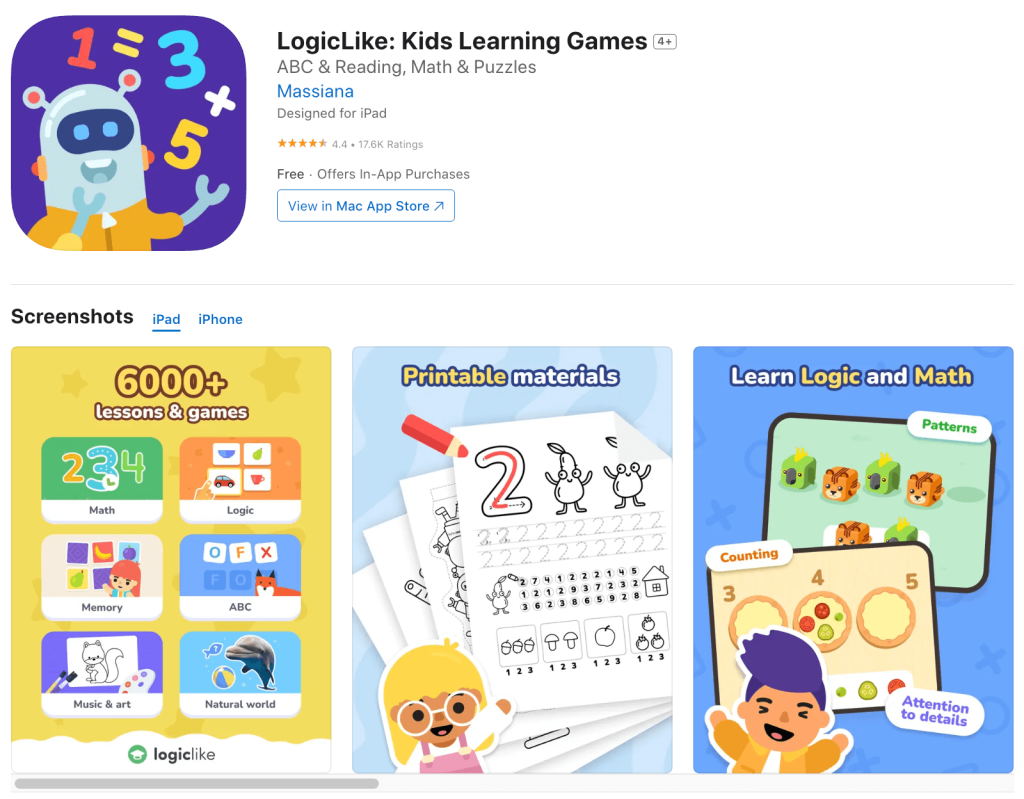
    LogicLike

    About the app: This platform offers over 5,500 educational puzzles designed for kids and adults with challenges grouped by objectives—whether for logic building, academic improvement, or competition preparation.

    Why It’s Great: Players can start at an easy level or jump into advanced tasks, tracking progress and competing with friends or other users for extra motivation.

    • Recommended Age: For children and adults.
    • Develops: Logic.
    • Free Trial: Available.
    • Where to Download: App Store and Google Play.

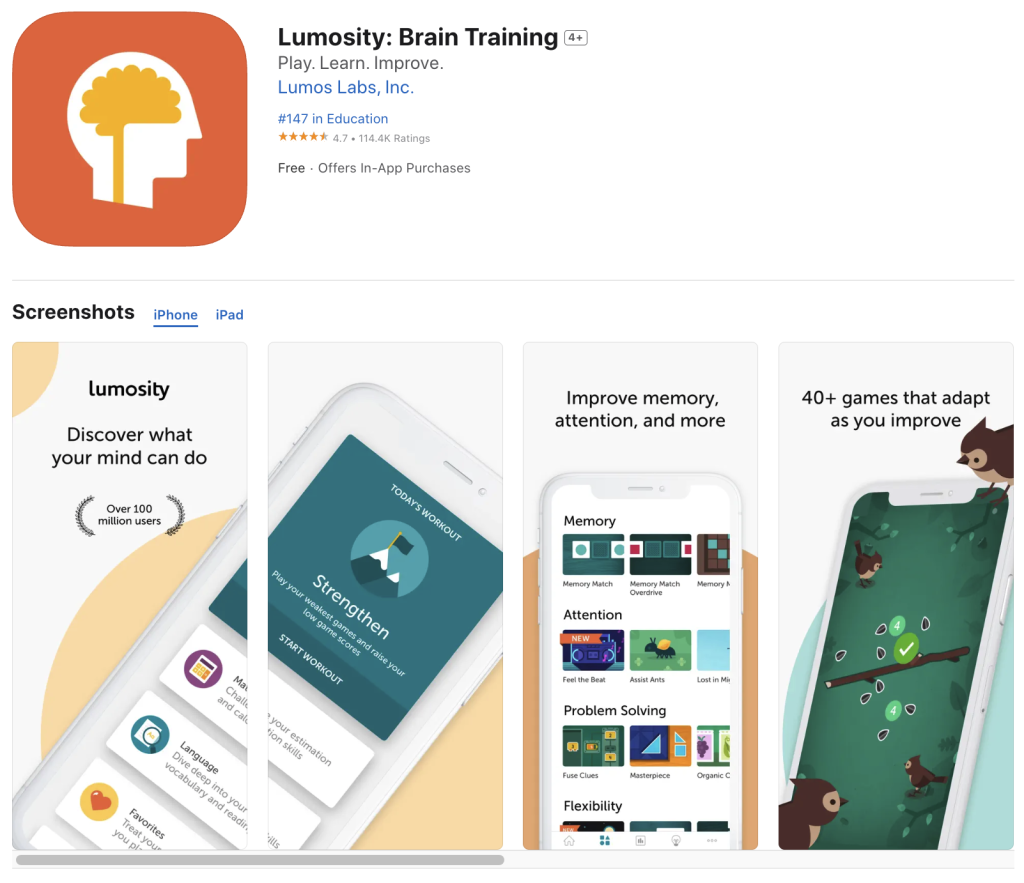
    Lumosity

    About the App: A scientifically designed brain-training app, Lumosity offers personalized daily workouts that adjust to user performance, making cognitive training both engaging and adaptive.

    Why It’s Great: This app trains memory, attention, flexibility, speed, and problem-solving—key cognitive abilities that impact academic success, decision-making, and everyday functioning.

    • Recommended Age: For teens and adults.
    • Develops: Memory, attention, flexibility, speed, problem-solving.
    • Free Trial: Available; premium subscription offers additional features.
    • Where to Download: App Store and Google Play.

    Brain It On!

    About the App: A physics-based puzzle game where players draw shapes to solve challenges, fostering creative problem-solving and spatial reasoning.

    Why It’s Great: Unlike traditional puzzle games, Brain It On! allows multiple solutions for each problem, requiring experimentation, logic, and trial-and-error learning—all essential for STEM-related skills

    • Recommended Age: For children aged 10 and up.
    • Develops: Creativity, problem-solving, physics concepts.
    • Free Trial: Free with in-app purchases.
    • Where to Download: App Store and Google Play.

    100 Doors: Escape Game

    About the App: Escape-room-style games are all the rage. They immerse players in mystery-solving and require logical thinking, pattern recognition, and attention to detail to advance through each level.

    Why It’s Great: This game enhances cognitive flexibility and deductive reasoning, teaching players to think critically, spot clues, and solve problems under pressure—valuable real-world skills.

    • Recommended Age: For children aged 9 and up.
    • Develops: Logic, attentiveness, analytical thinking.
    • Free Trial: The app is free with in-app purchases.
    • Where to Download: App Store and Google Play.

    Finding the Right Balance

    While mobile games can enhance logic and cognitive skills, balancing screen time with offline activities is essential. Encourage a mix of digital learning, physical play, and hands-on experiences to keep your teen’s brain active in multiple ways.

    Why not try one of these games together? A little friendly competition might even sharpen your own problem-solving skills!

    Cover image: Brocreative/Shutterstock.com