Рубрика: Parenting Checklist

  • Children Aged 10–13 and Too Much Screen Time

    Время на прочтение: 2 минут(ы)

    🚩 What the Numbers Say

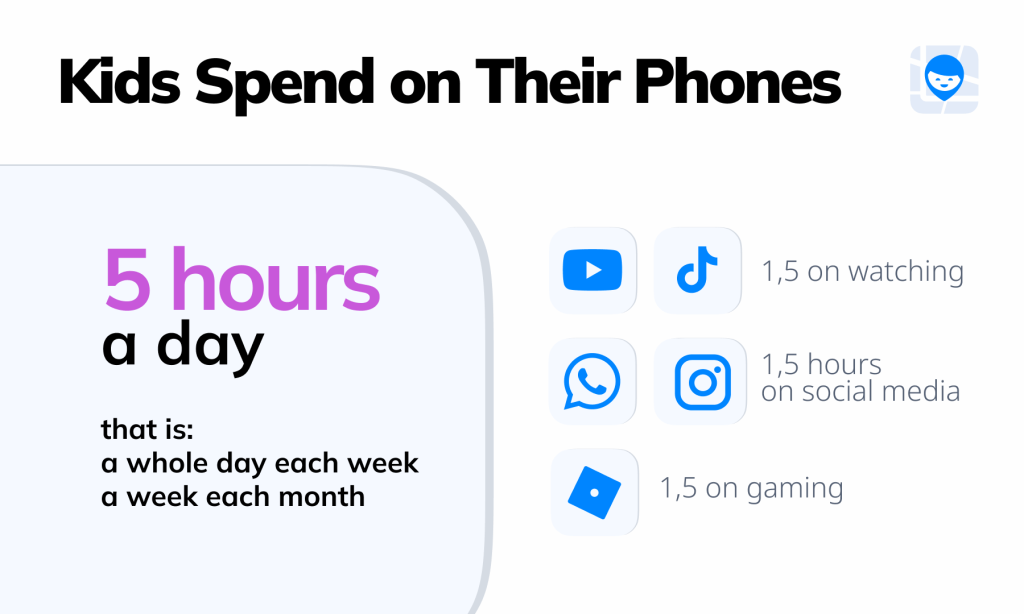
    In May 2023, we conducted a study and found that children spend an average of 5 hours a day on tablets or smartphones. That’s 35 hours a week or 150 hours a month more than a full-time job! On weekends, screen time increases by about 30 extra minutes per day.

    According to the FMK study

    🤖 Boys vs. Girls: How Kids Use Their Devices

    At age 10–13, boys are more likely to play video games, spending up to two hours a day gaming. Girls, on the other hand, spend around 1 to 1.5 hours daily on social media or watching videos.

    ⏰ How Much Screen Time Is Okay?

    Experts have different opinions on how much screen time is safe, and the recommended limits also depend on a child’s age.

    • The World Health Organization (WHO) suggests that 10–13-year-olds should have no more than three hours of screen time per day.
    • The American Academy of Pediatrics (AAP) recommends that children aged 6 and older have consistent limits on screen time to ensure it doesn’t interfere with sleep, physical activity, and other healthy behaviors.

    😣 Potential Effects of Too Much Screen Time

    Sleep Issues

    Too much screen time affects melatonin production, which regulates sleep. A recent study by the U.S. National Institutes of Health found that children who spend more than two hours a day on screens are more likely to have trouble falling asleep and getting enough rest.

    Problems Paying Attention

    Experts warn that excessive gadget use can make it harder for kids to focus. A study published in JAMA Pediatrics found that children who spend more than two hours a day on screens tend to struggle with concentration and learning.

    Lack of Physical Activity

    According to the European Academy of Pediatrics, kids who spend more than two hours on gadgets often have poor posture and are at a higher risk of obesity.

    Emotional and Mental Health Challenges

    Spending too much time on devices can affect a child’s emotional well-being. Research shows that 10–13-year-olds who have excessive screen time are more likely to experience anxiety, mood swings, trouble sleeping, and social difficulties. In some cases, prolonged screen time has even been linked to depression.

    ✅ What Can You Do?

    First, take a deep breath and remember that your child’s love for gadgets doesn’t mean you’re a bad parent! You’re doing great.

    1. Set a Routine. Allow screen time after school but with clear time limits.
    2. Be a Role Model. Establish “tech-free” family moments, like no phones at the dinner table.
    3. Offer Engaging Alternatives. Encourage hobbies like sports, music lessons, or after-school clubs.
  • Children at 9 Years Old and Too Much Screen Time

    Время на прочтение: 2 минут(ы)

    🚩 What the Numbers Say

    In May 2023, we conducted a study and found that children spend an average of 5 hours a day on tablets or smartphones. That’s 35 hours a week or 150 hours a month more than a full-time job! On weekends, screen time increases by about 30 extra minutes per day.

    According to the FMK study

    🤖 Boys vs. Girls: How Kids Use Their Devices

    At age 9, boys are more likely to play video games, spending up to two hours a day gaming. Girls, on the other hand, spend around 1 to 1.5 hours daily on social media or watching videos.

    ⏰ How Much Screen Time Is Okay?

    Experts have different opinions on how much screen time is safe, and the recommended limits also depend on a child’s age.

    • The World Health Organization (WHO) suggests that 9-year-olds should have no more than three hours of screen time per day.
    • The American Academy of Pediatrics (AAP) recommends that children aged 6 and older have consistent limits on screen time to ensure it doesn’t interfere with sleep, physical activity, and other healthy behaviors.

    😣 Potential Effects of Too Much Screen Time

    Sleep Issues

    Too much screen time affects melatonin production, which regulates sleep. A recent study by the U.S. National Institutes of Health found that children who spend more than two hours a day on screens are more likely to have trouble falling asleep and getting enough rest.

    Problems Paying Attention

    Experts warn that excessive gadget use can make it harder for kids to focus. A study published in JAMA Pediatrics found that children who spend more than two hours a day on screens tend to struggle with concentration and learning.

    Lack of Physical Activity

    According to the European Academy of Pediatrics, kids who spend more than two hours on gadgets often have poor posture and are at a higher risk of obesity.

    Emotional and Mental Health Challenges

    Spending too much time on devices can affect a child’s emotional well-being. Research shows that 9-year-olds who have excessive screen time are more likely to experience anxiety, mood swings, trouble sleeping, and social difficulties. In some cases, prolonged screen time has even been linked to depression.

    ✅ What Can You Do?

    First, take a deep breath and remember that your child’s love for gadgets doesn’t mean you’re a bad parent! You’re doing great.

    1. Set a Routine. Allow screen time after school but with clear time limits.
    2. Be a Role Model. Establish “tech-free” family moments, like no phones at the dinner table.
    3. Offer Engaging Alternatives. Encourage hobbies like sports, music lessons, or after-school clubs.
  • Children at 8 Years Old and Too Much Screen Time

    Время на прочтение: 2 минут(ы)

    🚩 What the Numbers Say

    In May 2023, we conducted a study and found that children spend an average of 5 hours a day on tablets or smartphones. That’s 35 hours a week or 150 hours a month more than a full-time job! On weekends, screen time increases by about 30 extra minutes per day.

    According to the FMK study

    🤖 Boys vs. Girls: How Kids Use Their Devices

    At age 8, boys are more likely to play video games, spending up to two hours a day gaming. Girls, on the other hand, spend around 1 to 1.5 hours daily on social media or watching videos.

    ⏰ How Much Screen Time Is Okay?

    Experts have different opinions on how much screen time is safe, and the recommended limits also depend on a child’s age.

    • The World Health Organization (WHO) suggests that 8-year-olds should have no more than three hours of screen time per day.
    • The American Academy of Pediatrics (AAP) recommends that children aged 6 and older have consistent limits on screen time to ensure it doesn’t interfere with sleep, physical activity, and other healthy behaviors.

    😣 Potential Effects of Too Much Screen Time

    📌 Sleep Issues

    Too much screen time affects melatonin production, which regulates sleep. A recent study by the U.S. National Institutes of Health found that children who spend more than two hours a day on screens are more likely to have trouble falling asleep and getting enough rest.

    📌 Problems Paying Attention

    Experts warn that excessive gadget use can make it harder for kids to focus. A study published in JAMA Pediatrics found that children who spend more than two hours a day on screens tend to struggle with concentration and learning.

    📌 Lack of Physical Activity

    According to the European Academy of Pediatrics, kids who spend more than two hours on gadgets often have poor posture and are at a higher risk of obesity.

    📌 Emotional and Mental Health Challenges

    Spending too much time on devices can affect a child’s emotional well-being. Research shows that 8-year-olds who have excessive screen time are more likely to experience anxiety, mood swings, trouble sleeping, and social difficulties. In some cases, prolonged screen time has even been linked to depression.

    ✅ What Can You Do?

    First, take a deep breath and remember that your child’s love for gadgets doesn’t mean you’re a bad parent! You’re doing great.

    1. Set a Routine. Allow screen time after school but with clear time limits.
    2. Be a Role Model. Establish “tech-free” family moments, like no phones at the dinner table.
    3. Offer Engaging Alternatives. Encourage hobbies like sports, music lessons, or after-school clubs.

    Cover image: Inside Creative House/Shutterstock.com

  • How Much Screen Time Is Too Much for a 7-Year-Old?

    Время на прочтение: 2 минут(ы)

    🚩 What the Numbers Say

    In May 2023, we conducted a study and found that children spend an average of 5 hours a day on tablets or smartphones. That’s 35 hours a week or 150 hours a month, even more than a full-time job! On weekends, screen time increases by about 30 extra minutes per day.

    According to the FMK study

    🤖 Boys vs. Girls: How Kids Use Their Devices

    At age 7, boys are more likely to play video games, spending up to two hours a day gaming. Girls, on the other hand, spend around 1 to 1.5 hours daily on social media or watching videos.

    ⏰ How Much Screen Time Is Okay?

    Experts have different opinions on how much screen time is safe, and the recommended limits also depend on a child’s age.

    • The World Health Organization (WHO) suggests that 7-year-olds should have no more than three hours of screen time per day.
    • The American Academy of Pediatrics (AAP) recommends that children aged 6 and older have consistent limits on screen time to ensure it doesn’t interfere with sleep, physical activity, and other healthy behaviors.

    😣 Potential Effects of Too Much Screen Time

    Sleep Issues

    Too much screen time affects melatonin production, which regulates sleep. A recent study by the U.S. National Institutes of Health found that children who spend more than two hours a day on screens are more likely to have trouble falling asleep and getting enough rest.

    Problems Paying Attention

    Experts warn that excessive gadget use can make it harder for kids to focus. A study published in JAMA Pediatrics found that children who spend more than two hours a day on screens tend to struggle with concentration and learning.

    Lack of Physical Activity

    According to the European Academy of Pediatrics, kids who spend more than two hours on gadgets often have poor posture and are at a higher risk of obesity.

    Emotional and Mental Health Challenges

    Spending too much time on devices can affect a child’s emotional well-being. Research shows that 7-year-olds who have excessive screen time are more likely to experience anxiety, mood swings, trouble sleeping, and social difficulties. In some cases, prolonged screen time has even been linked to depression.

    ✅ What Can You Do?

    First, take a deep breath and remember that your child’s love for gadgets doesn’t mean you’re a bad parent! You’re doing great.

    1. Set a Routine. Allow screen time after school but with clear time limits.
    2. Be a Role Model. Establish “tech-free” family moments, like no phones at the dinner table.
    3. Offer Engaging Alternatives. Encourage hobbies like sports, music lessons, or after-school clubs.

    Cover image: New Africa/Shutterstock.com

  • 5 Steps to Foster Independence in Your Teenager

    Время на прочтение: 2 минут(ы)

    Every parent dreams of seeing their child grow up to be successful, confident, and able to handle life’s challenges on their own.

    The teenage years are a crucial time when kids begin to form their social roles, develop a sense of adulthood, and start striving for independence. As they navigate these changes, it’s essential to provide the right support. Here’s how you can help your teenager become more independent.

    🔎 1. Give Them More Choices

    Involve your teen in family decisions—this will help them feel important and responsible. For instance, let them help plan the family dinner menu or discuss weekend plans together. Research shows that 77.6% of children feel more valued when they are included in family decisions.

    Start with something simple: “What would you like for dinner this Saturday? Let’s find a recipe and cook it together!” Activities like these not only promote independence but also strengthen family bonds and create lasting memories.

    💁🏻‍♀️ 2. Respect Their Personal Space

    As your teen matures, their relationship with you becomes more significant, but they also need personal space to set boundaries. Reduce unnecessary control over their activities. If they have their own room, knock before entering. Avoid pressuring them for deep conversations; they’ll open up when they’re ready. This fosters respect and trust.

    💙 3. Trust Your Teen

    Remember, when talking to your teen, you’re engaging with an adult who wants to express their opinions and make decisions. Avoid micromanaging—when you don’t control every aspect of their life, communication becomes more open and trusting. Your belief in their ability to make choices reinforces their independence. Make sure your words reflect trust, not doubt. This boosts their confidence and encourages them to share important moments with you.

    🤗 4. Praise Them More

    Swap general phrases like “Good job” with specific, meaningful praise. For example: “You worked really hard solving that problem—your perseverance is impressive!” Praising their efforts, not just the outcome, helps build both confidence and internal motivation. Focus on praising the process, not just the results.

    📈 5. Be Consistent in Your Statements

    Teenagers can become frustrated if parents frequently change their stance. To help your child be confident and goal-oriented, it’s important that your words are consistent. Ensure that your advice is clear, logical, and avoids creating confusion. Provide stable guidance that helps them develop their own ideas and perspectives.

    By following these steps, you can encourage your teen to embrace independence while maintaining a strong, trusting relationship with them.

  • 10 Ideas for Developing a 10-Year-Old Girl

    Время на прочтение: 4 минут(ы)

    At 10, girls are eager to be grown-up but still can love playing with dolls (and that’s perfectly fine!). Your daughter views the world with excitement but sometimes hides under the blanket when life get overwhelming. At this age, it’s especially important to try new things, discover herself, and take the first steps toward independence. The role of parents is not to push or rush, but to offer ideas that could spark her interest.

    🤸 1. Move More

    Not everyone loves running in gym class, but movement is essential for optimal development (physical, cognitive, and emotional)—at her own pace. If your daughter loves energy and excitement, sign her up for dance or gymnastics. If she loves water, take her swimming. If she enjoys being in a group and feeling the team spirit, volleyball or even soccer could be perfect (and don’t let anyone tell you, or her, it’s a “boys’ sport”). Find something that makes her eyes light up and that she can’t wait to do!

    💡 2. Learn to Find Her Voice

    At 10, girls are keen to express themselves. This can be supported by drama classes, where she can try different roles. Blogging or a stand-up comedy session in front of the family are great, too. Or, maybe she’ll find her voice in a literary club where she can write stories and even get them published. The key is to let her know her voice matters and it should be heard.

    🎨 3. Get Creative Without Limits

    Drawing, music, sewing, sculpting—what doesn’t matter is the medium, just that it’s fun and supports creativity. Some may want to draw comics, others might enjoy making animations on their phone, or creating outfits and upcycling old clothes. Don’t box creativity into rigid rules, or it will lose its spark.

    📚 4. Learn in Her Own Way

    School is one thing, but a genuine interest in learning is quite another. It comes when there’s less pressure. Let your daughter read books that truly interest her (and if they’re fanfics instead of classics, that’s okay!). Let her learn languages through movies and music. Let her explore chemistry not through textbooks but with kitchen experiments. Letting her learn in her own way shows her she is valuable just as she is!

    🧠 5. Understand How Her Body Works (And Don’t Fall for Myths)

    At 10, physical changes start happening, and a million questions arise. Why do some girls already wear a bra while others don’t? Why do some kids seem to be popular, while others feel lonely—is it how they look?

    It’s good if there’s an adult around to explain everything calmly and appropriately. You can also suggest watching educational videos or reading books like What’s Happening to My Body? because knowledge is always better than scary myths from the internet or from other kids who don’t always have the facts.

    🤓 6. Do Things on Her Own

    You can teach your daughter to cook simple meals—not just so that she can help out at home, but so she feels more confident in being independent. Give her more freedom in choosing her clothes—let her experiment with style, not just listen to your advice or compare herself to others. You could also suggest getting a houseplant to take care of (if it survives, great; if not, it’s still a valuable lesson).

    🤗 7. Step Outside the House (And the Comfort Zone)

    Hiking, trips, park walks—the more your daughter sees and experiences, the better. You can plant flowers or vegetables together in the garden, participate in local eco-projects, or simply take a camera on a walk to capture interesting details. The world is much bigger than the usual home-school-home route! Broadening her horizons can build not just physical skills but also self-confidence!

    🤖 8. Learn to Use Technology Productively

    Screen time isn’t always bad. Your daughter can learn to program, edit videos, or draw on a tablet. She could explore 3D modeling or dive into photo editing. The key is not to ban gadgets but to show her how to use them productively and safely. A helpful rule of thumb when it comes to technology—create more than you consume.

    💁🏻‍♀️ 9. Discover Different Women’s Stories

    Not just princesses and superheroes, but also artists, scientists, and explorers. Let your daughter see that girls/women can be anything they want and choose any path that speaks to them! Movies and books are great for this. Also, consider taking her to lectures by such women and encourage her to chat with the presenter.

    🧑‍🔬 10. Experiment with Different Professions

    Let her try being a journalist (interviewing relatives), a director (filming short movies), a fashion designer (sketching or combining outfits from her wardrobe), and more. The more professions she “tries on,” even in a fun way, the more confident she’ll feel when it comes to making real career decisions.

    Being a Girl Is About Possibilities, Not Limitations

    The most important thing you can give a 10-year-old girl is confidence in herself. That she can be different. That she is unique and one-of-a-kind. That being passionate about science is as normal as loving fashion. That she can wear dresses and climb trees. That she can be brave, smart, funny, thoughtful, sporty, creative—and it’s all “feminine.” Simply because it’s her choice!

    References:

    1. Your Child’s Development From 6 to 12 Years. Memorial Sloan Kettering Cancer Center
    2. How to Promote Cognitive Development: 23 Activities & Games. Positive Psychology
    3. MacDonald, F. (2016). Childhood and Tween Girl Culture. London, UK: Macmillan Publishers Ltd.
    4. Bulimwengu, A. S., & Cartmel, J. (2022). The tween years: A systematic literature review for services for children aged 10–13 years. Heliyon, 8 (1).
    5. Janssen, I., Ferrao, T., & King, N. (2016). Individual, family, and neighborhood correlates of independent mobility among 7 to 11-year-olds. Preventive Medicine Reports, 3, 98-102.

    Cover image: A.Ozerova/Shutterstock

  • 10 Ideas for Developing a 10-Year-Old Boy

    Время на прочтение: 3 минут(ы)

    At 10, boys are actively exploring the world and developing their interests and skills. Here are some ideas to help your son grow, develop, and thrive.

    🤸 1. Get Moving

    Sports aren’t just about staying healthy—it’s also a great way to teach confidence, discipline, and the ability to lose graciously but without giving up. The key is not to force your son into a sport you like. Let him try different things: team games, martial arts, skateboarding, or even parkour. If his eyes light up and he is eager to participate routinely, you’ve found the one!

    🎨 2. Express Emotions Through Creativity

    Drawing comics, drumming on anything that makes noise, sculpting with clay, or building car models—all these activities are more than just fun; they’re ways to express feelings. Sometimes, it’s easier to draw something than explain it in words. Plus, even adults love getting creative after a long day, so why shouldn’t your son do the same? Let him explore anything that helps him release emotions and recharge his positivity!

    🦸 3. Develop Thinking Without Boredom

    Puzzles, chess, books—they’re all classics. But there are unexpected ways to boost intellectual skills, too: let your son try designing games in Roblox or building complex structures in Minecraft. Or have him solve logic puzzles that seem like magic (like how to crack a code without a key).

    🧑‍🔬 4. Explore Science Through Experiments

    Create a volcano with baking soda and vinegar, grow crystals, or make a potato lamp—science doesn’t have to be boring. If possible, take him to a science museum or sign him up for a young scientist club. Experiments are great for teaching cause-and-effect, a lesson that can be applied across many aspects of life!

    ⚽ 5. Spend More Time Outdoors

    Nature is the best free stress reliever. Bike rides, fishing, forest navigation, or just running with the dog in the park—all these are great ways to build endurance and learn to enjoy the real world, not just the virtual one.

    🤖 6. Build Things with His Hands

    Building a birdhouse, a simple electrical circuit, or a robot from a kit—the feeling of «I did this myself» is priceless. Sometimes, creating something with his own hands will give him more confidence than thousands of words of encouragement.

    🎲 7. Play (Even Video Games!)

    Games can be positive, especially when approached mindfully. Many games improve reaction time, logic, and strategic thinking, and some even teach teamwork. Just don’t let gaming turn into an uncontrolled marathon. Setting boundaries together and sticking to them can keep things in balance; particularly important around technology.

    Let your son try games that make him think, such as:

    • The Witness (logic and spatial thinking)
    • Portal 2 (physics and teamwork)
    • Cities: Skylines (planning and resource management)
    • Civilization VI (strategy and history basics)
    • Minecraft (Education Edition) (creativity and programming)

    🧠 8. Analyze Information

    One of the most valuable skills today is the ability to efficiently search for and, most importantly, verify information–also known as media literacy. Turn this into a game and train your son: ask any question (e.g., “Why does the moon change shape?”) and have him find the answer, checking sources and separating facts from opinions.

    📚 9. Learn About the World Through Movies and Books

    Back to the Future, Star Wars, Indiana Jones, or The Jungle Book—let him watch and read age-appropriate stories about adventure, friendship, resourcefulness, and solving tough situations. This is also a great opportunity to then have conversations with your son about the lessons contained in movies and books.

    🏕️ 10. Try Something “Adult”

    Real fishing, hiking, volunteering for a community project, or even taking a trip to a new city without parents—your son needs to feel like he’s not just a child but becoming a young adult, too. It will be important to be sure he understands that such activities mean he needs to be more aware to stay safe, so be sure to talk through these aspects—without being too overprotective or ‘bossy’.

    Support is Key

    Growing up and developing isn’t a competition to see whose child is «cooler.» Let your son choose what interests him, and your role is to support him and not criticize his mistakes. After all, it’s through those mistakes that he’ll learn the most important lesson—understanding himself and the world around him.

    References:

    1. Your Child’s Development From 6 to 12 Years. Memorial Sloan Kettering Cancer Center
    2. Activities For 7 To 11 Years Old: Engaging And Educational Fun. Healthy Young Minds
    3. How to Promote Cognitive Development: 23 Activities & Games. Positive Psychology
    4. Bulimwengu, A. S., & Cartmel, J. (2022). The tween years: A systematic literature review for services for children aged 10–13 years. Heliyon, 8 (1).
    5. Janssen, I., Ferrao, T., & King, N. (2016). Individual, family, and neighborhood correlates of independent mobility among 7 to 11-year-olds. Preventive Medicine Reports, 3, 98–102.

    Cover image: Pavel L Photo and Video/Shutterstock

  • 10 Parenting Hacks for Raising a 10-Year-Old Girl

    Время на прочтение: 3 минут(ы)

    The age of ten isn’t just a number—it’s a whole era of change. Your little girl, who was once content with simple toys, is now interested in the latest fashion trends, is forming her first real and lasting friendships, and may even be texting or chatting about things you know little about. How can you stay connected with your daughter and help her grow up confident in herself?

    😣 1. Give Her the Right to Feel All Emotions

    «Don’t cry,» «Stop being dramatic,» «You’re overreacting»—these phrases don’t help your daughter understand her feelings better. They can also promote negative stereotypes about females. Instead of blocking her emotions, teach her how to express them in a healthy way. If she’s angry, encourage her to tell you what’s bothering her rather than slamming doors. If she’s sad, let her share her feelings instead of shutting down.

    A great practice is naming emotions aloud: talk about different feelings; how they show up through feelings, thoughts, and physically; and what to do about them. The better she understands herself, the easier it will be for her to manage her emotions.

    🗣️ 2. Speak to Her as an Equal

    Don’t dismiss your daughter’s problems. While a fight over matching backpacks may seem trivial to you, for her, it’s a big deal. If she comes to you upset about a friend, don’t brush her off—listen. A great response in these situations is: «I understand you’re upset. Tell me what happened?»

    🤯 3. Stop Solving Everything for Her

    Yes, it’s easier to pick out her jacket, sign her up for activities, and choose what goes in her lunchbox. But at 10, it’s time for her to start making decisions for herself. Start simple: let your daughter choose what to wear, how to decorate her space, and what to do in her free time. She needs to know that her opinion matters!

    🚩 4. Never Criticize Her Appearance

    It might seem obvious, but many parents still unintentionally hurt their daughters’ self-esteem. Even a passing comment like, «You should look neat because you’re a girl,» can sting.

    If she asks, «Am I pretty?» try responding with: «What do you think?» or «You’re amazing, and it’s not just about how you look.» That said, it is still an area that may occupy her thoughts, so also think about suggesting, “Most of us feel better about ourselves when we practice self-care. What do you think would be good ways for you to do that?”

    💳 5. Teach Financial Literacy

    At 10, girls are old enough to start understanding how money works. Think about giving your daughter a small fixed allowance for the week and talk about how to manage it. Teach her how to save, make choices, and understand that money doesn’t appear out of nowhere.

    🌸 6. Don’t Force «Girly» Hobbies on Her

    Does she love cooking? Awesome. Is she into skateboarding? Fantastic!. Don’t limit her interests with ideas like «girls don’t do that.» Let her explore different activities, even if it’s coding, robotics, or soccer.

    🤗 7. Teach Her How to Give Compliments (and Accept Them)

    This is a key skill for building healthy relationships. If your daughter is shy about giving compliments or brushing them off when she receives them, discuss it. Start with simple compliments: praise her for her actions, teach her to notice the good in others, and encourage her to thank people for kind words. Encourage her to practice doing the same for others.

    ✅ 8. Explain Personal Boundaries

    Her body, her things, and her emotions belong to her. If someone grabs her phone without asking, hugs her when she doesn’t want it, or asks uncomfortable questions, she can say «Stop.» Have this conversation regularly.

    And most importantly, respect her boundaries yourself! Never read her diary, never laugh at her feelings, and don’t force her to hug relatives «just because.»

    🚫 9. Teach Her to Say «No»

    «No» is a boundary, too. Teach your daughter to use this powerful word not just for safety (which, of course, comes first), but also in everyday situations:

    • «No, I don’t want to go just because everyone else is going.»
    • «No, I don’t want to join that challenge.»
    • «No, I won’t take on everyone else’s responsibility—I’m not the only one involved.»

    This is an important skill that will help her avoid pressure and toxic relationships in the future. Notice that the examples include the “why.” This is helpful as it gives the person on the receiving end less reason to keep pushing.

    🧘🏻‍♀️ 10. Show Her That Self-Care Isn’t Selfish

    Teach your daughter to listen to her body: if she’s tired, she needs rest; if she’s upset, she should talk about it; if someone crosses her boundaries, she needs to speak up. One of the most important lessons to instill in her from an early age: taking care of yourself is crucial and necessary. You’re the only one of you you’ve got!

    References:

    1. 10 Parenting Tips for Preteens and Tweens. Child Mind Institute
    2. Positive Parenting Tips: Middle Childhood (9–11 years old). Cdc.gov
    3. Stern, R., & Elias, M. J. (2007). Emotionally intelligent parenting. Educating People to be Emotionally Intelligent, pp. 37–48. Westport, CT: Praeger Publishers

    Cover image: A.Ozerova/Shutterstock.com
  • 10 Parenting Hacks for Raising a 10-Year-Old Son

    Время на прочтение: 3 минут(ы)

    Raising a 10-year-old boy isn’t just about making sure he’s fed, makes it to school, and is dressed appropriately for the weather—it’s about helping him understand himself, the world, and the people around him. How can you do this without endless lectures and power struggles? Here are some tried-and-true parenting hacks.

    ✅ 1. Listen More, Talk Less

    At this age, kids start forming their own opinions. If you constantly cut your son off with “I know better” or “Just do as I say,” he might stop communicating with you altogether. Show him that his thoughts matter, even if they sometimes sound a little naive.

    🤓 2. Explain and Negotiate

    A simple “Because I said so” doesn’t cut it anymore. Your son needs to understand why he should do something. “You have to be home by 9 pm” won’t be as effective as “I worry when you’re out after dark because it’s not always safe.” The more logical your reasoning, the less pushback you’ll get.

    ⏰ 3. Get Him Involved in Household Chores

    Ten is the perfect age to start teaching, and expecting, responsibility—cleaning his room, loading the dishwasher, or cooking simple meals. The trick? Don’t make chores feel like punishment. Instead of a boring to-do list, make it fun: pick a day to cook something new together, or assign your son an “important mission” like watering the plants. This builds both responsibility and confidence—where he knows “I’m a valuable part of the family!”

    🤗 4. Do Things Together!

    Instead of giving life lessons in a serious, formal sit-down talk, try bonding over board games, fixing a bike, or watching and discussing movies. Kids are much more likely to open up during shared activities than when they’re ordered, “Come here, we need to talk.”

    💡 5. Let Him Try New Things—and Possibly Fail

    If your son wants to play soccer today and quits after a month, that’s fine. Changing interests at 10 is normal—he’s figuring out who he is. Support his experiments, even if they seem like passing fads to you. That said, it can be expensive and disruptive to others to quit mid-season, so look for ways he can try out interests before fully committing.

    🗣 6. Don’t Be the «Morality Police»

    Ten-year-old boys sometimes test boundaries by talking back, using odd words (and yes, that can include profanity), or trying to act older than they are. That doesn’t mean he’s “on the wrong path.” Instead of shutting it down with strict rules, talk about where these behaviors come from and what he hopes to gain from them. Help him find more positive replacements.

    💨 7. Allow Him to Argue

    Disagreeing isn’t rudeness—it’s actually a life skill! Sure, it’s tempting to shut things down with a firm “Don’t talk back!”—but will that help him when he’s an adult? Healthy debates teach boy to express his opinions and will show him that his voice matters. The key is to help him argue and debate respectfully and calmly.

    💁🏻‍♀️ 8. Own Up to Your Mistakes

    If you lost your temper, punished your son unfairly, or overreacted, apologize. It won’t make you seem weak; in fact, it will show him that making mistakes is normal and that respect is a two-way street. Bonus: you’re helping him by modeling how to apologize appropriately as well!

    🤝 9. Teach Conflict Resolution Without Physical Fighting

    Kids deal with misunderstandings all the time. Your job is to teach your son when to stand his ground and when to let things go. Instead of saying, “Just hit back!” try, “Ask him directly what’s wrong” or “Tell him how that made you feel.”

    😥 10. Never Shut Down His Emotions

    “Boys don’t cry” is an outdated stereotype that does more harm than good. By 10, kids can recognize their feelings but don’t always know how to handle them. Instead of saying, “Stop whining,” try, “You seem upset—let’s figure out what’s really bothering you.” Journaling is also a great way for kids to process their feelings.

    References:

    1. 10 Parenting Tips for Preteens and Tweens. Child Mind Institute
    2. Positive Parenting Tips: Middle Childhood (9–11 years old). Cdc.gov
    3. Stern, R., & Elias, M. J. (2007). Emotionally intelligent parenting. Educating People to be Emotionally Intelligent, pp. 37–48. Westport, CT: Praeger Publishers

    Cover image: wavebreakmedia/Shutterstock

  • 5 Tips to Help Your Child Do Homework Independently

    Время на прочтение: 2 минут(ы)

    At 9 years old, kids are just starting to adjust to their school routine. Homework can quickly turn into a stressful experience for the whole family, with parents worrying and trying to push their child to finish. So it often ends in frustration or arguments. To help make homework time easier and more productive, here are five practical tips.

    ⏰ 1. Break Down the Workload

    At this age, kids still find it hard to sit still for long periods. To keep homework manageable, break it up into chunks. Start with tasks that require the most focus, like math or writing. Afterward, let them take a short break and move on to lighter activities, such as reading.

    Creative assignments like drawing or crafting should come last. You can also mix tougher subjects with easier ones to keep your child engaged and energized.

    🗣️ 2. Talk It Out and Explain the Reason

    Kids are more motivated when they understand why they’re doing something. Explain the reason behind their homework and how it helps them learn and grow. Answer their questions and acknowledge that some tasks might feel boring but are still important.

    Encourage your child to tackle assignments independently, but reassure them that it’s okay to ask for help. Praise their effort often and celebrate their small successes. For a smoother process, suggest they start with what they already understand, saving the trickier tasks to work on together later.

    📝 3. Prepare the Workspace Ahead of Time

    Distractions are the enemy of focus. Create a comfortable and clutter-free workspace where your child can concentrate. Get rid of any toys, devices, or anything else that might pull their attention away.

    Make sure all the essentials like textbooks, pencils, erasers, and rulers are within reach. Having everything ready ahead of time saves time and reduces frustration.

    😎 4. Foster Independence (But Stay Within Reach)

    Imagine if your boss hovered over your shoulder and commented on everything you did. How long would you last? Kids feel the same way when parents micromanage their homework time.

    Help them plan their tasks and break down assignments into clear steps. Then step away, but not too far away in case they need help or have questions.

    Remember, homework is designed to reinforce concepts already taught in class. Your role is to guide, clarify, or correct, not to do the work for them.

    🤸 5. Respect Your Child’s Temperament

    Should homework happen right after school or later in the evening? There’s no one-size-fits-all answer. Some kids need to relax and recharge after school, while others prefer to get it done before playtime. Work together to find what suits your child’s natural rhythm.

    Temperament also plays a big role. Energetic kids (like extroverted or highly active personalities) might benefit from burning off energy outside first. Calm, methodical kids may need extra time to work at their own pace. Sensitive children can get overwhelmed quickly, so breaking tasks into smaller steps with frequent breaks can help them stay focused.

    Stay Patient and Supportive

    Homework is a new challenge for 9-year-olds, and learning to handle it independently is a process. With your support, patience, and encouragement, your child will build confidence, focus, and resilience, which are essential tools for life. And you’ll go through fewer battles over homework and more peace at home.