Автор: The Findmykids Editorial Team

  • Dangerous Challenges: What Parents Should Know

    Время на прочтение: 2 минут(ы)

    Some online challenges, like train surfing or risky selfies, can pose serious threats to a child’s life. Knowing what these challenges look like and how they spread can help you spot red flags early.

    What Are These Challenges and Why Do Kids Try Them?

    Dangerous challenges often circulate through social media or messaging apps. Kids might be encouraged to take part in things like choking games, jumping from rooftops, consuming harmful substances, or riding on the outside of moving vehicles.

    These challenges show up on TikTok, YouTube, Telegram, Discord and also spread through friends, classmates, and influencers.

    Younger kids might try them out of curiosity, wanting to act like older peers or get attention. They don’t yet have a clear sense of risk or strong internal brakes to say no.

    Teens may join in because of peer pressure, a desire to stand out, lack of attention, or just wanting to experiment. Their ability to foresee consequences is still developing and the need to belong can be especially intense.

    Common dangerous challenges include:

    • Choking or blackout games
    • Train surfing (riding on the outside of vehicles)
    • Risky rooftop selfies or stunts
    • Self-harm flash mobs
    • Drinking contests or dares
    • So-called “death groups”
    • Extreme or “trash” livestreams
    • Dares involving pain, fear, or humiliation for clout

    Signs Your Child May Be at Risk

    Kids don’t always say they’re involved, but their behavior might show it. Watch for:

    • Becoming unusually secretive or withdrawn
    • Showing interest in disturbing or dark topics
    • Avoiding conversations, especially about friends or the internet
    • Unexplained marks or injuries (bruises, cuts)
    • Sudden mood shifts or changes in behavior or friend groups
    • Rewatching the same videos over and over
    • Using odd or coded language

    How to Talk With Your Child About Dangerous Challenges

    Don’t panic. Don’t blame. And definitely don’t lecture. Try something like: “Have you seen any weird or scary videos online lately? What do you think about them?”

    It’s important to listen without judgment. If trust is already fragile, a family therapist may help. What matters most is that your child knows: they won’t get in trouble—you’ll help them through it.

    How to Protect Your Child

    Even if you don’t notice any warning signs, building trust and a safe digital environment ahead of time makes a big difference. Monitoring your child’s online life isn’t about total control; it’s about honest, ongoing connection.

    Here’s what you can do:

    • Ask about what they’re watching—talk about videos, creators, trends, and watch together when you can.
    • Teach them to think critically about what they see online.
    • Set a good example with your own digital habits—what you post, how you respond, who you support.
    • Follow or friend your child on social media—not to spy, but to stay connected.
    • Use parental controls, but talk openly with your child about it.
    • Discuss app choices before they’re downloaded.
    • Set clear, fair family rules for screen time and internet use.

    It’s also important to know: strict surveillance or harsh rules can damage trust.

    What Not to Do

    Avoid actions that may push your child further away:

    • Don’t sneak into their accounts or read their private messages. Open involvement works better than spying.
    • Don’t use hidden monitoring apps. They damage trust and don’t teach independence.
    • Don’t rely on parental controls alone. They only help when paired with honest conversations.
    • Don’t mock or blame your child if they talk about troubling content.
    • Don’t threaten punishment for seeing harmful videos; it’ll just make them hide things.
    • Don’t shift all responsibility to schools or social platforms. Your involvement matters most.

    We can’t control everything around our kids. But we can be present. Trust, attention, and calm, open conversations are what truly protect children.

    References:

  • Why Some Teens Stop Taking Care of Themselves

    Время на прочтение: 2 минут(ы)

    Your teen won’t wash their hair, wears the same clothes every day, and doesn’t brush their teeth. You try to reason with them, you worry, you get frustrated but nothing changes.

    It might seem like laziness or defiance. But often, the reasons run deeper. And they can be addressed with patience and without pressure.

    Why Some Teens Stop Taking Care of Themselves

    This struggle often shows up between the ages of 11 and 18 and affects about 1 in 5 teens. It’s a time of rapid growth, identity shifts, and deep emotional sensitivity.

    Self-care can take a back seat. And here’s why that might happen:

    • A disconnect between body and mind. The body is growing fast, but emotionally, the teen may not feel ready for it.
    • Low self-esteem. They may not see the point of caring for themselves or may feel they don’t deserve it.
    • Weakened connection with parents. When emotional closeness is missing, motivation for self-care often drops.
    • Neurodivergence. Teens with autism or ADHD may struggle with routines, planning, or sensory overload.
    • Emotional struggles. Bullying, anxiety, depression, or quiet rebellion can all show up through neglect of hygiene.

    How to Talk About Hygiene (Without Shame or Pressure)

    Don’t scold. Don’t shame. Don’t demand. What works better is staying close and offering support gently.

    You could try saying:

    • “I’ve noticed things feel a little hard right now. What’s making it difficult to take care of yourself?”
    • “It’s important to me that everyone feels comfortable at home. Can we think together about how to make that happen?”
    • “Is there something you’d like to change about your routine? Want to work through it step by step?”
    • “Would you be open to visiting a stylist or skincare expert? Maybe they could give you some fresh ideas—just for you.”
    • “When do you feel most confident? Is there anything that helps you feel that way?”

    What Helps Teens Start Caring for Themselves Again

    To rebuild a routine, teens need to feel two things: they have the strength and they’re not alone.

    Here’s what might help:

    • Praise small steps. Even just washing their face is progress—acknowledge it.
    • Make a plan together. A simple morning and evening checklist can be a great start.
    • Use reminders and visual cues. Try a list on the bathroom mirror, or a gentle app notification.
    • Create a welcoming space. Favorite soap, soft towels, quiet time in the bathroom, or music they like—it all lowers resistance.
    • Shift responsibility gradually. They don’t need to do everything at once. With gentle support, they’ll begin to feel capable.
    • Involve trusted professionals. A barber, dermatologist, or stylist can explain things in a teen-friendly way, and often, outside voices are more effective than parents’ advice.

    When It’s Time to Seek Help

    If hygiene avoidance goes on for a long time and comes with anxiety, withdrawal, or deep apathy, consider talking to a teen therapist. Sometimes what looks like protest is actually pain.

    Taking care of yourself is a skill—one that builds slowly over time. The most powerful thing you can do as a parent? Stay close. Be patient. Believe in your child even when it’s hard.

    References:

  • How to Help with Homework (Even If You Can’t)

    Время на прочтение: 2 минут(ы)

    “Can you help me with this?”, your child asks, and you panic inside: What kind of problem is this? Is that a new way of dividing? Is this even math?

    The good news is: you don’t need to understand the school curriculum to be helpful. Just wanting to support your child already means a lot.

    You Don’t Have to Know Everything to Be Helpful

    Here’s what matters: your role isn’t to have all the answers. It’s to create a home environment that makes learning easier.

    When a child has a calm, supportive adult nearby, it’s easier for them to work through challenges, even tough ones. Your presence is the foundation they need.

    What You Can Do Even if You Don’t Know the Subject

    You don’t need to be a math whiz or a grammar expert to be a great support. These simple actions make a real difference:

    • Set up a study space. Create a quiet, well-lit area with minimal distractions and everything your child needs. This helps them stay focused.
    • Help build a routine. Make a simple daily schedule together: when to study, do homework, take breaks, and use devices. Post it somewhere visible. It’ll be easier for everyone to stick to.
    • Just be there. Sometimes sitting nearby is all it takes for a child to feel supported.
    • Look for answers together. If you don’t know something, say so, then search for the answer together online, ask a chatbot like ChatGPT, or reach out to the teacher.
    • Don’t be afraid to ask for help. If the subject is important and you’re stuck, that’s okay. Reach out to a tutor, an older student, a family friend, or the teacher.

    What Not to Do

    Sometimes, even with the best intentions, we make mistakes that can get in the way of learning. Here’s what to avoid:

    • Don’t do the work for them. They won’t learn how to solve problems on their own and may start doubting their abilities.
    • Don’t criticize. If it seems like they’re being lazy, they might just be struggling.
    • Don’t let it turn into a fight. If you’re both frustrated, take a break.
    • Don’t panic over unfinished homework. It’s not the end of the world. Kids can catch up, talk to their teacher, or start fresh. The most important thing isn’t scolding, it’s support and guidance.

    What really matters isn’t how many assignments get done, it’s knowing a parent is there when things get hard. That’s what your child will remember.

    When you stay calm, offer support, and show that you believe in them, it becomes easier for your child to believe in themselves. Even if you don’t understand the schoolwork, you can still give your child something powerful: the confidence that challenges can be overcome especially when someone’s by your side.

    References:

  • Should You Make Your Child Eat?

    Время на прочтение: 2 минут(ы)

    Many parents worry when their child eats very little or refuses food. It feels like if they don’t intervene, the child will go hungry and won’t grow properly. But is it really a good idea to make kids eat or finish their plate? What does research say, and how can you respond with care?

    Why Your Child Might Not Want to Eat

    Appetite naturally fluctuates in babies, kids, and teens. That’s completely normal. Growth phases, fatigue, illness, stress, or even just mood can all affect how much a child wants to eat. Sometimes a child is already full, but a parent insists, “You’ve barely eaten anything. Have a few more bites.” These requests often reflect the adult’s anxiety more than the child’s actual need for food.

    What Research Says

    According to the Journal of the American Dietetic Association, forcing children to eat doesn’t increase their interest in food. In fact, it can lead to anxiety and negative associations with mealtime.

    Experts from the University of Michigan’s C.S. Mott Children’s Hospital emphasizes that insisting kids “clean their plate” disrupts their ability to recognize hunger and fullness cues and may raise the risk of overeating later in life. Pressure doesn’t build healthy eating habits—it undermines them.

    Why “Just One More Bite” Is Pressure

    Comments like “There’s a puppy at the bottom of your bowl—you have to save it!”, “No cookies unless you eat something real,” or “You can’t leave the table until you finish” may seem harmless, but they’re a form of pressure.

    Parents mean well, but the child feels controlled, loses their sense of autonomy, and stops tuning into their own body’s signals.

    How to Help Your Child Enjoy Eating

    Research shows that a warm, relaxed atmosphere at the table helps kids develop a healthy relationship with food. It’s not just about what’s on the plate. It’s about connection, respect, and freedom of choice. Here’s what can help:

    • Offer food without pressure and eat together; this builds a sense of safety and connection.
    • Give your child choices between healthy options so they feel in control and know their preferences are respected.
    • Talk about what’s in the food and how it helps the body. You can gently mention which vitamins are in certain foods and why they matter.
    • Stick to regular mealtimes. When breakfast, lunch, snacks, and dinner happen consistently, food becomes part of a predictable routine.

    The approach “You decide how much to eat” is central to respectful feeding. It helps kids learn to trust their bodies and develop mindful eating habits.

    What to Avoid

    Sometimes, in trying to help, adults use strategies that backfire. Here’s what not to do:

    • Don’t use food as a tool for pressure or manipulation: “Eat your broccoli and you’ll get dessert.”
    • Don’t bribe or threaten: “If you don’t eat, you’re not going outside.”
    • Don’t compare: “Look how well your brother eats.”
    • Don’t mock your child’s tastes or criticize their preferences.
    • Don’t label food as “good” or “bad,” “healthy” or «unhealthy»—it can create anxiety around eating.

    Forcing kids to eat doesn’t help, it hurts. What truly makes a difference is creating a calm, respectful environment where your child can learn to listen to their body. What matters most isn’t how much they eat, but how they feel about food.

    References:

  • Is It My Fault if My Child Doesn’t Listen?

    Время на прочтение: 2 минут(ы)

    It’s something almost every parent has faced: you say something to your child in a calm, patient, even firm voice, and get silence in return. Or yelling. Or a stubborn “I don’t want to.” At some point, the thought might creep in: “Am I a bad parent?”

    Take a breath. These thoughts are completely normal. Let’s look at why kids sometimes don’t listen, and what that actually means for you as a parent.

    💥 Why Don’t Kids Listen?

    Not listening isn’t always a problem. Sometimes it’s just a way for a child to express themselves.

    A toddler might simply not hear or understand what you’re saying when they’re deeply focused on play. A teenager might push back to assert independence. This is how kids test boundaries and learn to say “no”, a skill they’ll need later in life.

    Sometimes “not listening” is a sign of tiredness, anxiety, frustration, overstimulation, or even something physical, like hunger. Some kids shut down when they feel unheard. And sometimes it’s not about what you say, but how you say it. Maybe the words are too complex, too sharp, or don’t account for the child’s emotional state.

    👉 None of this means you’re failing. If your child isn’t listening, that doesn’t mean you’re a bad parent. It means they’re learning how to interact with the world, and they’re doing it in a safe space with you.

    🤧 Why Guilt Doesn’t Help

    Guilt is common. We want to be “perfect,” we worry about “messing up” our kids, and we compare ourselves to others or to curated moments on social media.

    But guilt clouds your perspective. It leads to frustration, and it distances you from your child. What your child needs isn’t a perfect parent; they need a real, reliable adult. Someone who stays close, even when things get tough.

    🔀 How to Gently Guide Behavior

    Sometimes a small shift in how you interact makes all the difference. Here’s what might help:

    • Start with eye contact and gentle touch. Sit next to them, touch their shoulder, look into their eyes.
    • Speak simply and clearly. Not three long sentences, just one short, straightforward one.
    • Offer a choice. Not “Get dressed now,” but “Do you want to put on your hat or coat first?”
    • Validate their feelings. “I get that you don’t want to go, but we need to. I’m here with you.”
    • Repeat calmly. It’s okay to remind them more than once. The key is to stay kind and steady.

    These strategies aren’t about strict control. They’re about connection, and about respecting the child. They help your child learn how to listen, and how to feel heard, too.

    (далее…)

  • Why Your Child Has Lost Interest—and What to Do

    Время на прочтение: 2 минут(ы)

    Sometimes kids lose interest in everything—school, going outside, even spending time with friends. This can feel alarming to parents, but it’s important to remember: this kind of state doesn’t always mean something serious is going on. The key is to understand what’s behind the change and offer gentle support.

    😵‍💫 Why Kids Might Lose Interest

    A drop in motivation can be caused by both internal feelings and external circumstances. Sometimes a child just needs time to recover from being overwhelmed. Other times, it’s a signal that they’re struggling with emotions or their environment.

    Here are a few common reasons behind this kind of state:

    • Emotional burnout and loneliness. Even in a loving family, a child can feel isolated, especially if they’re missing warmth, support, or acceptance.
    • Too much screen time. Devices give the brain constant stimulation. As a result, regular activities may start to feel dull or pointless.
    • Weak emotional connection with parents. Without regular, heartfelt communication, it’s hard for kids to feel valued, and to stay interested in life.
    • Lack of self-regulation skills. If a child doesn’t yet know how to manage tough emotions, they may shut down and avoid everything.

    🤝 How to Support Your Child

    Parental support can make a huge difference. The goal isn’t to push, but to create a space where the child can gently recover.

    • Talk regularly and without pressure. Start with neutral topics. Show that their mood matters to you, not just their achievements.
    • Reduce screen time gradually. Try replacing it with shared walks, games, or simply time together.
    • Help your child process their emotions. Instead of giving advice or criticism, name what they might be feeling: “It seems like things are hard right now,” “You look upset,” “I wonder if you’re feeling sad.” Then gently explore what’s behind those emotions and what might help. This builds self-awareness and a sense of being accepted.
    • Create family rituals. Shared breakfasts, bedtime chats, or reading together help children feel secure and valued.
    • Celebrate even small efforts. Praise not just outcomes but the effort behind them. This helps rebuild a sense of “I can.”

    📣 When to Seek Extra Support

    If your child’s lack of interest lasts for more than two weeks, especially if they’ve lost interest in things they used to love, consider talking to a child psychologist. A specialist can help uncover what’s going on and offer gentle strategies for support.

    It’s especially important to pay attention to signs like sleep problems, emotional withdrawal, or intense mood swings.

    (далее…)

  • How to Stay Active as a Family

    Время на прочтение: 2 минут(ы)

    Sometimes the most helpful thing for a family is to simply get outside and move a little—together. It doesn’t have to be a sport. What matters is the joy of moving and the feeling that you’re a team.

    Why Moving Together Matters

    Physical activity as a family isn’t just good for health. It strengthens your bond, builds habits that stay with kids for years, and creates that precious time together we often miss in daily life.

    Studies show that shared physical activity boosts mood, lowers stress, and makes everyone a little happier.

    Activities the Whole Family Can Enjoy

    It’s important to pick things that suit everyone—toddlers, teens, and adults. Here are a few ideas that can be adapted to your pace:

    🏕️ Walks and Hikes

    A simple and accessible way to stay active. Even a short evening walk can become a pleasant tradition. If there’s a park or forest nearby, plan a small hike with a thermos and some sandwiches.

    🚲 Bike Rides

    Great for all ages. Younger kids can ride in a bike seat or trailer, teens can use scooters or their own bikes. A weekend ride can easily become a family tradition. Try changing up the routes and planning your next destination together; it’s a chance to explore and connect without rushing.

    🔎 Park Quests

    Turn a regular walk into a game. Little ones can look for five different trees, listen for three nature sounds, or collect leaves and pinecones. With older kids, you can take turns spotting things in another language they’re learning. Whoever names the most objects gets a small prize. Suddenly your walk becomes an adventure.

    💃 Dance Parties at Home

    Put on your favorite songs and dance however you like. These moments bring energy and connection, especially when everyone joins in.

    Try follow-along dance videos where the moves get faster as you go. It’s fun, even for those who usually feel shy about dancing.

    ⛹️ Active Games

    Badminton, frisbee, tag, hide-and-seek—classic outdoor games that are genuinely fun for all ages. Kids especially love when adults play along, not just watch from the sidelines.

    🏁 Family Challenges

    Who walks the most steps in a day? Who climbs the stairs without stopping? Who can spot all the colors of the rainbow during a walk?

    Make up your own challenge that is fun and inclusive for everyone.

    How to Make It a Habit

    Let movement become a regular part of family life. Pick a day or time that’s your time to move, like Sunday afternoons. Let your kids help choose the activity so they feel involved and empowered.

    The key isn’t pressure—it’s excitement.

    References:

  • Essential safety rules for kids

    Время на прочтение: 2 минут(ы)

    Keeping a child safe isn’t a one-time talk, it’s a system. These simple rules help children feel more confident and help parents feel more at ease.

    🔸 Personal Space and the Body

    Every child should know: their body belongs to them. The ability to protect personal boundaries and trust their instincts is a lifelong skill.

    Core rules:

    • Know and protect personal boundaries. A child should understand that their body is their own, and only they can decide who touches it and when. They have the right to say “no” to any touch, even from someone close or from a doctor.
    • Understand that saying “no” isn’t rude. If something feels uncomfortable, they can refuse. It’s not misbehavior, it’s self-respect.
    • Recognize boundary violations. If a touch feels awkward, tense, or just off, it’s a sign to be cautious and talk to a trusted adult.
    • Never show their body without a real need. Even if it’s a doctor online or a “friend” from social media, it’s not safe.
    • Reach out when something feels wrong. Even if they’re scared, embarrassed, or unsure, parents are there to help and protect them.

    🔸 Emotions and Inner Signals

    A child might not always understand what’s happening, but they can often feel that something is wrong. Help them learn to trust that feeling and talk about it.

    Core rules:

    • Pay attention to feelings of unease. Intuition is important. Even if nothing bad seems to be happening, that feeling is enough to stop and think.
    • Tell an adult about bad secrets. If a secret feels scary or makes them feel guilty, they should never keep it to themselves.
    • Say “no” when something feels wrong. Feeling scared, pressured, or uncomfortable is always a valid reason to stop or leave a situation.

    🔸 Online Safety and Devices

    The internet is full of fun and risks. Kids need to know how to protect their data and what to do if someone crosses the line online.

    Core rules:

    • Keep personal information private. Talk to your child about not sharing their address, school name, photos, or location with strangers online.
    • Only share info with trusted people. That includes parents, close family, or friends, and only through secure apps like Findmykids.
    • Don’t talk to strangers online. Even if someone seems like a peer, it’s best to check with a parent before replying.
    • Be careful with voices and photos. Explain that AI can fake voices and images, even familiar ones.
    • Set a family code word. This can help tell real messages from fake ones, and give kids peace of mind.
    • Take screenshots and ask for help. Teach your child how to take a screenshot if someone sends something strange or scary. Let them know they can always come to you, and you’ll figure it out together.

    🔸 Safety Outside the Home

    At school, in the park, or at the mall—situations can come up. Prepared kids stay calmer and safer.

    Core rules:

    • Never go with a stranger. No matter the excuse—gifts, stories, or persuasion—only go somewhere with a parent’s permission.
    • Know what to do if they get lost. Stay in place and look for a safe adult like someone in uniform or a parent with kids.
    • Plan a safe route. Discuss the path to school or other regular places. Agree on safe spots and people they can ask for help. Apps like Findmykids can send you updates about your child’s movements, like on the way to school and back.
    • React if someone is following them. Go where there are people. Call a trusted adult. Shout. Ask for help loudly and clearly.

    🔸 Communication and Support

    Mistakes and tough moments happen to everyone. What matters most is that a child knows they don’t have to face it alone.

    • Don’t stay silent—ask for help. A child should know they won’t be left alone, even if they’ve made a mistake or are in a hard situation. Let them know you’ll always be there.

    These 15 rules help your child feel more secure, and help you feel more at ease. You’re already doing so much to keep your child safe. And we’re here to support you whenever you need it.

    References:

  • 9 Habits for a Closer Bond With Your Child

    Время на прочтение: 2 минут(ы)

    Close relationships with children don’t just happen; they grow from small, everyday moments. A kind look. A shared laugh. A quiet conversation before bed. These simple acts—done regularly—help children feel loved and safe, and give your relationship strong roots.

    Here are 9 habits that can bring you and your child closer:

    ⏳ 1. Spend a Little Time Together Every Day

    Even 10 minutes can mean a lot. Set aside that time just for your child without phones or distractions.

    Play, read, or simply talk before bed. The message is: You matter to me. I’m here with you. Consistency and real attention build a sense of safety and self-worth.

    🫂 2. Give More Hugs

    Hugs offer warmth, comfort, and connection. But not every child is always ready for touch, and that’s okay.

    Be gentle. Stay close. Respect their space. Even a kind look or calm presence can show your love.

    🧏‍♀️ 3. Listen With Full Attention

    When your child talks, try not to interrupt, judge, or rush in with advice.

    Yes, it’s not always easy to stay fully present, especially when the topic is Minecraft, school drama, or online videos. But this is your child’s world.

    Listening with genuine interest builds trust, even when the subject feels far from your own.

    🏡 4. Create Simple Family Rituals

    Evening tea. Bedtime stories. Pancakes on Sundays. A walk in the park. These small routines don’t take much time, but they create connection and lasting memories.

    🛀🏽 5. Take Care of Yourself Too

    To be fully present for your child, you also need space to rest and recharge. Self-care isn’t selfish—it’s the foundation of your emotional balance and energy.

    Better to take a breath than to care from a place of exhaustion. Children feel your warmth more than your effort.

    🙏 6. Say Thank You for Their Effort

    Notice when your child takes initiative, like offering to help, showing kindness, or making a choice.

    Even the smallest steps deserve appreciation: “You really tried.” “Thank you. I know that wasn’t easy.”

    🥺 7. Apologize When You’re Wrong

    We all make mistakes. When you apologize—»I’m sorry, I overreacted»—you’re not showing weakness, but strength. It teaches your child honesty, humility, and how to repair trust.

    💞 8. Talk About Feelings

    When you say things like: “I’m angry because I’m tired,” or “I feel sad today. I just need a moment,” you’re modeling emotional awareness.

    It helps your child understand their own emotions and see that sharing feelings is okay.

    ⚖️ 9. Offer Choices

    Letting your child choose what to wear, what game to play, or how to spend after-school time gives them a sense of voice and respect.

    They don’t have to decide everything. But having some choice within clear limits teaches autonomy and builds connection.

    Even one simple habit can shift your relationship in a meaningful way. Strong bonds aren’t built on big events—they grow through small, repeated moments of care. Let these habits be your anchor.

    References:

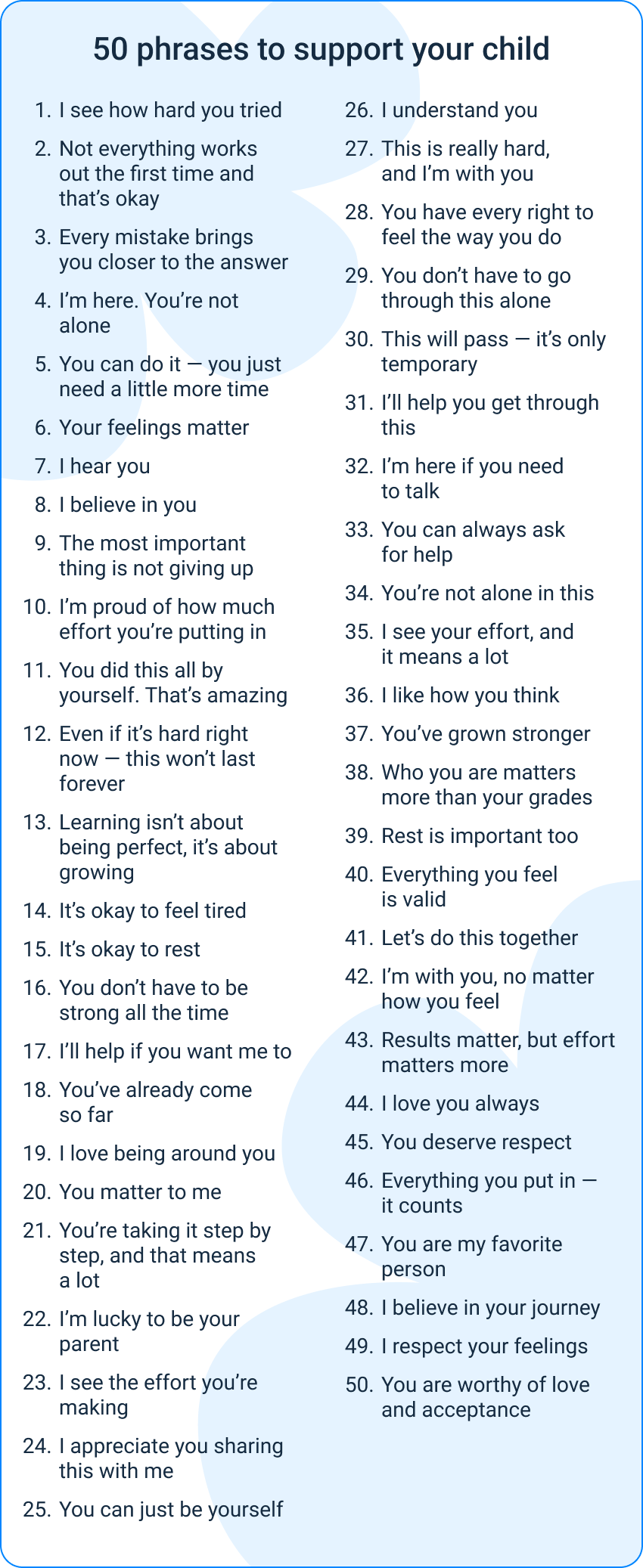
  • 50 Phrases Every Child Needs to Hear

    Время на прочтение: 2 минут(ы)

    When a child is struggling, it’s often a parent’s words that help them stay steady.

    A teen might not verbally express that they need support. They might shrug, mumble, or seem aloof, but that doesn’t mean your words don’t matter. In fact, it’s in those very moments that they matter the most.

    How Supportive Words Help a Child

    Words of encouragement help a child feel less alone. They show that their emotions are valid and that they are accepted even when they’ve made a mistake, feel upset, or want to shut down.

    A study from Hong Kong found that teens who regularly receive warm emotional support from parents experience less anxiety, and report fewer health complaints like fatigue or pain.

    Why? Because they feel, deep down: “I can get through this,” even when things are hard. A child who feels supported learns better, communicates with more confidence, and handles change with more calm. And it doesn’t take grand gestures—just the steady presence of a calm, supportive adult.

    Words That Ground, Not Judge

    It’s not just about praise. It’s also about giving your child something solid to lean on.

    Saying “good job” can feel like checking a box. Instead, tell them what exactly went well. Say what made you proud.

    That way, your child doesn’t just hear evaluation—they feel real connection and support.

    Download PDF

    Words aren’t magic, but they do have power, when they’re spoken regularly. Let your child know that even when they’re sad, scared, or make mistakes, you’re there with interest, attention, and care.

    References: