Автор: Dr. Lilla McManis

  • Teen Anger: How to Handle It

    Время на прочтение: 2 минут(ы)

    Strong emotions often lie behind a teen’s aggression: anger, anxiety, confusion, or a sense of injustice. And they can’t always express these feelings in appropriate words or behaviors, so the emotions come out as yelling, harshness, sensitivity, or conflict.

    This doesn’t mean there’s something seriously wrong with your child. Aggressive behavior is actually an attempt to cope with inner tension. Let’s take a look at where aggression comes from and how you can work through it with your teen to manage it.

    😡 Why Teens Become Aggressive

    Between the ages of 12–16, teens go through major changes in their nervous system. Emotions become stronger, but controlling them is still difficult. Teens react more sharply to stress and injustice, especially in social situations—at school, with friends, at home, or online.

    What often hides behind outwardly rude behavior is insecurity, the feeling of not being heard or understood, or a need for independence. The latter is especially strong in kids ages 13 to 15, who are newly experiencing the drive all adolescents feel to separate from their parents.

    🌋 What Can Trigger Aggression

    Aggressive behavior doesn’t appear out of nowhere—it’s always triggered by something. Certain factors can increase the tendency toward aggression:

    • A tense family atmosphere. Constant criticism, conflicts between parents, or lack of support.
    • Feeling alone and unwanted. For example, when it’s hard for a teen to connect with peers or feel like part of a peer group.
    • Lack of sleep and exhaustion. Heavy school workload, early wake-ups, or anxiety before exams.
    • Low self-esteem. Feeling like they can’t succeed, are inadequate, or their identity is threatened.
    • Constant comparisons and pressure to fit in. Especially in teen culture, where it’s important to be “just like everyone else” or “better than everyone.”

    All of these factors build up—and an outburst of aggression can become the only way to release tension if the teen isn’t offered or shown another way.

    💁 What Parents Can Do

    • Don’t argue in the heat of the moment. A stressed brain can’t process logic and reasoning. It’s better to stay calm: “I’m here. Let’s talk when you’re ready.”
    • Respect their need for independence. Talk about rules, explain your reasons, and appropriately negotiate instead of forcing decisions. Teens are much more likely to follow rules they see as fair.
    • Teach emotional coping skills. Breathing exercises, physical activity, creative outlets, or journaling can all help with self-awareness and emotion regulation.
    • Praise their efforts. Even a small step is worth encouraging. “You really tried not to snap today—I noticed. That’s great.”

    🤝 When to Seek Help

    If aggression becomes frequent, damages relationships, affects schoolwork, or is accompanied by extreme withdrawal, it’s time to seek help from a clinical psychologist or psychiatrist. Helpful approaches include:

    • Cognitive-behavioral therapy (CBT)
    • Family counseling
    • Emotional regulation training programs

    Teen aggression isn’t a life sentence—it’s a signal that your child is struggling. With support and attention, even the stormiest periods can be worked through together.

    References:

  • How to Support Your Child’s Big Feelings

    Время на прочтение: 4 минут(ы)

    Every day, children experience a wide range of emotions. One of the most important life skills is learning to recognize and process these emotions. Books and life experience can help—but children learn this best in the real world with attentive adults by their side.

    ❗ Why It Matters

    When children understand their emotions and can express them, those emotions start to help rather than hinder them.

    Research shows that emotional intelligence (the ability to understand, manage, and use emotions effectively) is linked to less stress, anxiety and depression, prosocial behaviors, better peer relationships, and better academic performance. In essence, emotional intelligence promotes resilience, the ability to manage and recover from challenging situations.

    Expressing emotions means putting them into words, showing them through facial expressions and body language, and sharing what you feel. It’s not about “bottling up” or “letting it all out”—it’s about experiencing emotions in a safe and balanced way, both for the child and those around them.

    👣 5 Steps to Talking About Emotions and Building Emotional Connection

    World-renowned psychologist Dr. John Gottman developed an approach that helps parents support their children during moments of strong emotion. It includes five simple steps:

    1. Notice the emotion—through behavior, tone of voice, facial expression. For example, your child might frown, grumble, or light up with joy.
    2. Choose the right moment— connect when your child is open to it.
    3. Show acceptance—“You’re feeling angry. That’s okay.” or “You’re so happy! I love seeing you like this.”
    4. Help name the emotion—“Are you feeling hurt?” “It looks like you’re sad.” “You seem excited, is that right?”
    5. Look for solutions together—“What could help you right now?”

    Conversations like these help children become more self-aware and able to recognize, acknowledge, and accept their emotions instead of ignoring them or feeling ashamed of them. It’s important not to label emotions as “good” or “bad”—even anger, fear, or shame can reveal what truly matters to a child and where their personal boundaries lie.

    Feeling any emotion is completely normal. And when a child knows this, it’s easier for them to relate both to themselves and to others.

    🗣 When to Talk About Emotions

    If your child is crying, yelling, or slamming doors, it is quite likely they won’t be able to hear you in that moment. What matters more than anything is offering support, not trying to start a conversation.

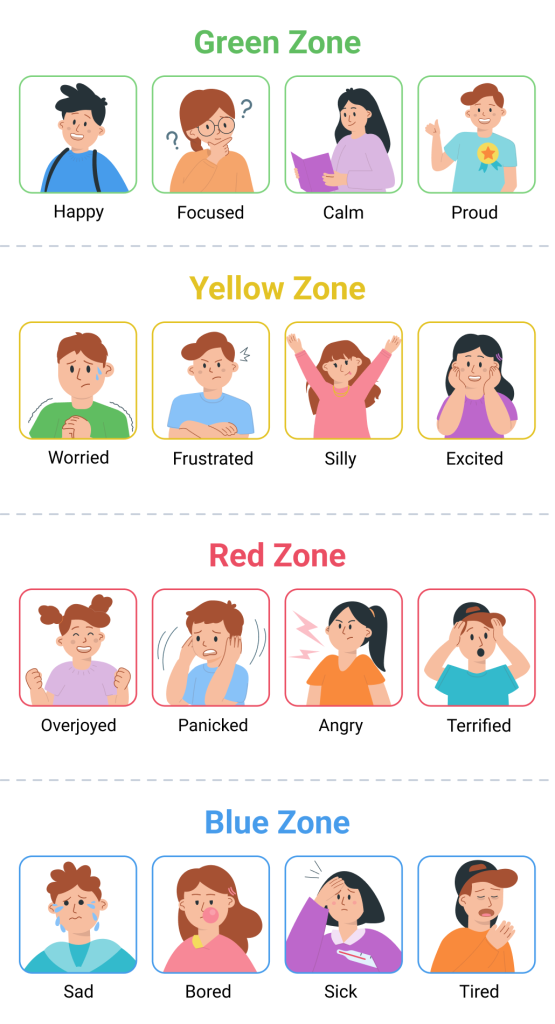
    A helpful tool for recognizing when your child is ready to talk is the “Zones of Regulation” framework developed by occupational therapist Leah Kuypers. It teaches children to recognize their emotions and manage them.

    Occupational therapy helps children (and adults) develop skills for everyday life—like getting dressed, playing, learning, and interacting with others. It’s especially useful for children who struggle with motor control, emotions, attention, or handling daily challenges.

    According to this framework, emotional states fall into four zones:

    • 🟢 Green — calm, focused. A good time for a conversation.
    • 🟡 Yellow — tense, anxious, or irritated. You can gently try to connect.
    • 🔴 Red — very angry or having a meltdown. Best to give the child space and time.
    • 🔵 Blue — sad, tired, or apathetic. Offer quiet support and presence, without pushing.

    💡 The best time to talk about emotions is when your child is in the green or yellow zone. In the red zone—help them calm down first. In the blue zone—help them feel safe and comforted.

    The best time to talk feelings is in the green or yellow zone | Source: nhsborders.scot.nhs.uk

    💁‍♀️ How to Model Emotional Awareness for Your Child

    You don’t need a special occasion to talk about emotions. It becomes a natural part of life when you’re mindful of your own emotions and not afraid to talk about them.

    Here are some simple ways to do this every day with your child:

    • Speak about your own feelings aloud: “I felt really frustrated today because I was tired.”
    • Talk about the emotions of characters in books or movies.
    • In non-dangerous or highly emotionally charged situations, start with emotions before addressing behavior: instead of “Why did you do that?” try “How are you feeling right now?”
    • Don’t try to “fix” feelings: “I see that you’re upset” feels much safer than “Don’t worry about it.”
    • Remind your child that all emotions are normal. Even uncomfortable ones are okay to experience.

    💬 Helpful Phrases for Talking About Emotions

    If you’re unsure of how to start a conversation, here are some ideas.

    To open a conversation:

    • “You look so happy—is it because of [event]? Want to tell me about it?”
    • “Would you like to tell me what happened? I’m here.”
    • “It seems like you’re having a hard time right now. Let’s figure it out together.”

    To help name an emotion:

    • “You’re glowing today. What made you so happy?”
    • “I think you might be a little nervous. Does that happen sometimes before important things?”
    • “You’re quiet today. Are you feeling sad, or maybe just tired?”

    To show acceptance:

    • “It’s okay to feel angry. I feel that way sometimes, too.”
    • “I understand you feel disappointed when you can’t go outside.”
    • “You feel proud of yourself and you should! I’m proud of you, too.”

    To move toward solutions:

    • “You really enjoyed that activity. Would you like to do it again?”
    • “What do you need right now—some alone time, a chat, a hug?”
    • “When I’m angry, it helps me to do something with my hands, like washing dishes. What helps you when you feel angry?”

    Learning to understand and process emotions is an important skill for both children and adults. It helps us listen to each other more effectively, resolve conflicts more easily, and feel closer to the people we care about. And it’s something we can practice every day, starting with something simple—like saying, “I’m feeling a little sad today—could you give me a hug?”

    References:

  • The Key to Understanding Your Teen: 10 Questions

    Время на прочтение: 3 минут(ы)

    A lot is changing inside your teenager: they’re starting to see themselves in new ways, pulling away from their parents toward independence, and searching for what truly matters to them. Instead of pushing hard for them to stay close, it’s better to create a warm, open space where they can feel safe enough to talk—when they’re ready.

    In this article, you’ll find 10 thoughtful questions that can really make a difference to meeting this goal.

    🌗 Questions About Trust, Boundaries, and Finding Themselves

    1. What are you dreaming about these days?

    Why ask: It invites your teen to reflect on their wishes and goals and shows that you genuinely care about their inner world.

    Their answers can reveal what inspires them—and how you can support their dreams and aspirations.

    2. What feels the hardest for you right now?

    Why ask: It helps uncover challenges your teen may be dealing with on their own—and that you are unaware of.

    You’ll get a better sense of what struggles they might be hiding behind calmness or distance—and where your support could mean the most.

    3. When do you feel most like yourself?

    Why ask: It highlights the moments when your teen feels free and true to themselves.

    This can help you encourage more of those authentic experiences, without pressure or judgment.

    4. What qualities do you admire in adults?

    Why ask: It helps your teen think about what earns their respect, trust, and interest in adults.

    You’ll better understand what makes them feel safe—and how you can become someone they can truly rely on.

    5. What do you like and dislike about our conversations?

    Why ask: It shows your willingness to listen to feedback and build a relationship based on equality and mutual respect.

    You’ll learn what matters most to your teen in communication—and how to make your talks feel warmer and more welcoming.

    6. What would you like to change in your life?

    Why ask: It encourages your teen to think consciously about their life and builds a sense of agency.

    You’ll see what’s bothering them—and where you can help them act, instead of feeling powerless.

    7. What qualities do you value most in friends?

    Why ask: It reveals what your teen looks for in close relationships and what makes them feel strong and supported.

    As friendships mean the world to teens, you’ll better understand what healthy friendships mean to them—and how you can encourage those bonds.

    8. What does happiness mean to you?

    Why ask: It encourages your teen to think about their values and deeper goals.

    You’ll gain insights into what brings them joy and peace—and how to nurture more of that in everyday life.

    9. What makes a friendship feel real to you?

    Why ask: It helps your teen think about what truly matters in friendships—whether it’s trust, honesty, support, or something else.

    You’ll better understand their expectations for relationships—and how to support their journey toward healthy, meaningful connections.

    10. What do you enjoy doing with me?

    Why ask: It shows what shared activities bring your teen joy and a sense of closeness.

    You’ll find out what moments together mean the most to them—and how to create even more experiences that feel good for both of you.

    Even if a teen seems quiet or distant, they still long for genuine attention and acceptance. These questions don’t cross their boundaries—they gently open a door into their inner world.

    Adolescence is a time of being highly self-conscious and teens want to avoid feeling exposed, so the most important thing is to stay patient and nonjudgmental, simply being there to show that they can always count on your support.

    References:

  • 10 Questions to Understand Your Child

    Время на прочтение: 3 минут(ы)

    At 10–12 years old, preteens go through a lot of changes: hormones kick in, friendships grow in importance, and their sense of identity and who they are as individuals starts to form. Emotions become sharper and more complex, and worries and anxieties might become more frequent. In these moments, it’s especially important for a child to have a trusted adult nearby—someone who not only asks questions, but truly listens.

    These 10 questions can help you start an honest and meaningful conversation. Your child’s answers will give you a glimpse into what they feel, what brings them joy, and what weighs on their mind. Most importantly, asking these questions will show your child that you are here, ready to listen and understand.

    🫂 Ages 10–12: Helping kids talk about what matters

    1. What brings you the most joy right now?

    Why ask: This question helps your child focus on positive emotions and shows you what matters to them in everyday life.

    You’ll discover what makes them happiest—and this will help you create more of those moments together.

    2. When do you feel lonely?

    Why ask: Loneliness is something many 10–12-year-olds experience but often hide. An open-ended question encourages your child to reflect and share their feelings.

    You’ll show that you’re there to listen, helping your child feel supported in their relationships.

    3. What thoughts or feelings are hard for you to talk about?

    Why ask: Sometimes kids can’t find the words or are afraid to share their feelings directly.

    This question creates a safe space where they can open up without pressure or fear of judgment—an important step toward trust and closeness.

    And if they’re not ready to answer, that’s okay. You can simply say: “Whenever you feel ready to talk, I’m here.”

    4. What do you feel like doing when you’re angry?

    Why ask: It helps you understand how your child deals with anger and what coping strategies they use.

    You’ll learn what’s behind their reactions and can guide them toward safe ways to express big emotions.

    5. What’s important to you in a friendship?

    Why ask: This reveals the qualities and behaviors your child values in friends—and helps you understand what they look for in their relationships.

    You might also pick up on challenges they are having in their friendships so that you can support them in dealing with these.

    6. What comes easily to you, and what feels hard?

    Why ask: This question builds self-awareness, helping your child recognize their strengths and accept their challenges.

    You’ll see where they might need extra encouragement—and where it’s time to celebrate their wins.

    7. What would you change about school if you could?

    Why ask: School can bring both joy and frustration. What goes on at school matters, after all, kids spend the majority of their days there.

    This question uncovers what feels unfair or overwhelming to your child, so you can offer the right support.

    8. How do you feel when something doesn’t work out?

    Why ask: Understanding your child’s response to setbacks can help you support them better.

    You’ll be there to remind them that mistakes don’t make them weaker—they’re just part of growing and learning.

    9. What are you most worried about right now?

    Why ask: Some worries stay hidden until we gently ask about them.

    This question opens the door to talk about anxiety in a caring way—and shows your child that all feelings are valid and you’re here to help.

    10. How do you feel when adults don’t understand you?

    Why ask: It helps your child recognize and name their emotions when they feel misunderstood.

    You’ll better understand whether they feel frustrated, hurt, angry—or something else—and can respond with more empathy and patience. You might also hear some hard things about yourself as a parent, but this is an opportunity for you to grow as well.

    ⠀⠀
    At 10–12, kids want to be heard—even if they don’t always know how to say it out loud. It’s important not to rush into advice or judgment. Give your child time to talk things through, offer your support, and if you notice they’re struggling with something bigger, help them find a way forward.

    References:

  • 10 Questions to Help You Get to Know Your Child Better

    Время на прочтение: 3 минут(ы)

    One of the most sensitive and effective ways to understand how your child feels is through conversation.

    We’ve prepared 10 questions for kids aged 7 to 9 that can help them open up—and help you stay close and supportive without crossing boundaries.

    These conversations aren’t about control—they’re about attention and trust. They can be the start of real closeness and understanding in your family.

    💛 Ages 7–9: Learning to Talk About Feelings

    Children this age are still learning how to communicate on a deeper level. Having an opportunity to practice will not only help their family relationships but also relationships with other adults and peers.

    1. What was the happiest and the saddest moment of your day?

    Why ask this? It helps your child start recognizing and naming their emotions—and helps you understand what brings them joy or makes them upset. This can guide you in offering support or adjusting daily routines.

    2. What helps you feel calm when you’re angry?

    Why ask this? It teaches your child that anger is okay and encourages them to find healthy ways to deal with strong feelings.

    This kind of question opens the door to discussing ways to cope with anger: being alone for a while, playing a game, hugging a toy, or just talking it out. You’ll learn what really helps your child—and how to be there when they need it.

    3. What do you like about your friends?

    Why ask this? It helps your child notice good qualities in others and build healthy relationships. You’ll also learn what values matter most to them.

    4. Has there ever been a time when I didn’t understand you the way you wanted me to?

    Why ask this? It shows your child that their perspective matters—and reminds them that adults can make mistakes too.

    This question helps build trust and gives you a chance to see yourself through your child’s eyes—and grow closer.

    5. If you could have any superpower, what would it be?

    Why ask this? It sparks imagination—and reveals deeper wishes and values.

    You might discover something your child feels they are missing in real life: strength, fairness, recognition, or the chance to help others—and understand what qualities matter most to them right now.

    6. What’s your favorite part of the day? Why?

    Why ask this? It helps uncover the times when your child feels their best—and gives insight into their preferences.

    Their answers can help you adjust routines to better support their emotional highs and lows as well as support their budding interests.

    7. What do you love daydreaming about?

    Why ask this? It gives you a peek into your child’s imagination and desires.

    Daydreams can show what’s truly important to them—and what they hope for. It’s a way to understand what inspires your child and how to support their interests.

    8. Was there anything today that surprised you?

    Why ask this? It builds awareness and helps you see the day through your child’s eyes.

    Their answers show what moments and details make an impression, shaping how they see the world and respond emotionally.

    9. Is there anything you’d like to change about your day?

    Why ask this? It helps your child reflect on their experience and feel more in control of their day.

    Their answer gives you feedback: what felt uncomfortable or boring, and where there’s a chance to make their day calmer or more joyful.

    10. What did you discover today?

    Why ask this? It encourages a love of learning and helps your child notice their own growth.

    For you, it’s a window into what truly interests them and how you can support their curiosity and confidence.

    (далее…)

  • 10 Tips for Connecting with Your Teen

    Время на прочтение: 3 минут(ы)

    Communicating with teens can feel a bit like a landmine at times. But it doesn’t have to be this way! Teens benefit greatly from a warm, responsive relationship with their parents, and despite sometimes seeming like they are pushing you away, teens actually want to stay connected with their parents.

    We’ve put together 10 ideas to help you build a warm, respectful connection with your teen—without pressure or conflict.

    💬 Keep Communication Open

    Listen without distractions. Avoid interrupting or judging. Talk together as equals—it helps build trust.

    How: Ask open-ended questions, show genuine interest in their views, and hold back on criticism.

    Example: Instead of “Are you on your phone again?!” try “What are you checking out? Is it good?”

    🫶 Show Empathy

    Acknowledge your teen’s emotions, even when they don’t make sense to you. Try putting yourself in their shoes. Compassion lowers conflict and brings you closer.

    How: Don’t rush to give advice. Reflect their feelings back in respectful words. While you can share that you understand because something similar has happened to you, keep it brief and on point. You don’t want to come across as making it all about you.

    Example: “Looks like something’s bothering you” or “Sounds like things are really tough right now. Want me to just sit with you for a bit?”

    🤝 Aim for Cooperation, Not Control

    Involve your teen in decisions, keeping them age-appropriate, of course. Feeling heard builds responsibility and confidence.

    How: Set rules together, let them choose between a few options.

    Example: “You want to go to the party—let’s agree on what time you’ll be home.”

    ❤️‍🩹 Support Emotional Regulation

    Help your teen recognize and handle big emotions—it boosts their confidence in tough situations.

    How: Talk about coping strategies, model healthy habits, and try breathing or other grounding techniques together.

    Example: “When I get angry, I try to take deep breaths. Want to do it with me?”

    💪 Strengthen Your Bond

    Spend time together simply because you love them—not for their grades or achievements.

    How: Make time for warm, casual moments. Do things you both enjoy.

    Example: Weekend walks, dinner without phones, or going to a concert together.

    🌐 Stay Aware of Their Online World

    Ask what excites them online and how it makes them feel—without judgment.

    How: Treat their online life as a regular part of their day, share your own thoughts too.

    Example: “Did any Reels stand out today? What did you like about it?”

    🤗 Be Attentive to Changes

    Notice significant shifts in mood or behavior, and don’t be afraid to ask gentle questions.

    How: Learn the signs of anxiety, depression, or self-harming behavior. Keep an eye on their mood and talk when needed. If you’re unsure, a psychologist can help.

    Example: “Lately, there’s been more talk about how tiredness and isolation might be signs of depression—even in teens. Want to talk about it?”

    🗣️ Talk Openly About Tough Topics

    Discuss sex, substances, fears—even if there aren’t perfect answers, being present matters. If it’s hard to bring up, try watching a movie or show about it and start there. Take some time before starting these conversations to learn the facts about these topics so that you can share accurate information.

    How: Be respectful, acknowledge the topic is sensitive, and create a safe space to talk.

    Example: “If you ever have questions about relationships or sex, I want you to know you can talk to me. I won’t judge—I’ll just share what’s important to know.”

    🤸‍♂️ Stay Flexible

    What worked in childhood may now annoy or distance them. Flexibility helps you grow together.

    How: Adjust your approach, try new ways of talking with them, and ask what matters to them now.

    Example: “I can see my questions are bugging you—how about I just tell you about my day instead?”

    🙏 Reach Out for Help

    You don’t have to manage everything alone. Outside support can improve your relationship—and your teen’s well-being.

    How: Ask a psychologist or parent coach for guidance, find support groups for parents, or read up on teen psychology.

    (далее…)

  • When Your Child Lies: Advice from a Psychologist

    Время на прочтение: 3 минут(ы)

    Finding out your child has lied can feel upsetting. You might feel confused, anxious, or want to get to the bottom of it right away. But before you react, try to remember: lying among children is extremely common and isn’t always about bad intentions. It can be part of growing up, a way to handle emotions, or even a way to protect a relationship.

    🤥 How Lying Changes With Age

    In early elementary school, kids may lie to avoid punishment or make themselves look better. In preteens, lying can help them fit in with peers or hold onto a sense of importance.

    For teens, lying often comes from a desire to protect their personal space and feel like adults respect their boundaries. At this age, they usually understand that lies can hurt others, and they start trying to explain or justify their reasons to themselves and others.

    💬 How to Respond to Lying and Stay Connected

    If your child lies, it doesn’t mean the trust is broken forever. In fact, this might be the most important moment to stay emotionally close. Here are a few steps that can help you stay connected and show your child that honesty matters in your family.

    1. Take a Pause

    If you catch your child in a lie, try not to jump into accusations. First, ask yourself: What is behind my child lying? Has something changed recently? What might my child be feeling?

    It can help to talk it over with other adults involved in the parenting and child development field before deciding how to respond, especially if you find yourself getting really upset.

    2. Set Clear Rules Together

    Honesty can take time to develop. Share why it matters in your family. Talk about which behaviors are not okay, and what will happen if agreements are broken. Try to agree on consequences in advance, and avoid using threats.

    3. Focus on the Reasons Behind the Lie

    Kids rarely lie “just because.” Usually, there’s a reason. For example, if your child lied to avoid punishment, it might be worth reflecting on how your family responds to mistakes.

    If your child lies to get attention, maybe they’re not feeling seen enough in other areas. Try to look beyond the behavior and see the need behind it.

    4. Encourage Steps Toward Honesty

    If your child comes clean about a lie, praise them and try to reduce the consequences. This helps show that telling the truth is safe and builds trust over time.

    Let your child know that honesty helps make things better, and try to follow this rule yourself.

    5. Avoid Labeling

    Words like “liar” can feel like an attack on who your child is—not just what they did. If they hear those words often, they may stop believing they can be good, even when they try.

    It’s more effective to talk about the lie itself and what caused it. This helps teach responsibility and supports a trusting relationship.

    6. Be the Example

    Honesty is something kids learn by watching adults. You might not think that “white lie” is a big deal–until your child starts doing it too. Admitting your mistakes and being sincere—even in tough conversations—is a powerful lesson.

    🆘 When to Seek Help

    If your child lies even when there’s no clear reason or benefit, does it often, and doesn’t feel guilty, they might be struggling with something deeper. In this case, try to support them, and consider reaching out to a psychologist.

    If the lies involve risky behaviors—like aggression, substance use, or breaking the law—it’s important to act sooner rather than later. Not because “everything is terrible,” but because your child needs help to understand and change the behavior.

    (далее…)

  • 5 Unexpected Reasons Kids Act Out

    Время на прочтение: 3 минут(ы)

    If your child is being stubborn, irritable, or snapping back at you, it’s natural to look for conspicuous “big” answers in their personality, school issues, or parenting styles. But sometimes the cause is less obvious—and no less important. Here are five sometimes subtle reasons your child’s behavior might be troubling or change, and how you can gently support them.

    1. Perfectionism and fear of failure

    A child might refuse to follow requests or try something new not out of defiance, but because they’re afraid they won’t do it perfectly. This is especially common in kids who set high standards for themselves—sometimes unrealistic, and worry about disappointing their parents or teachers.

    📌 What can help: Try praising effort rather than outcome. Let your child know mistakes are okay—they’re how we all learn. Share your own stories too: “It was hard for me too at first” or “I didn’t get it right the first time either.” Be sure to let them know if they are trying but do fall short, you and their teachers won’t be disappointed in them.

    2. Low emotional awareness

    If your child seems unsympathetic or doesn’t apologize when they hurt someone, it doesn’t necessarily mean they’re being mean. They might simply find it hard to read emotions or to respond appropriately—something that can be improved over time.

    📌 What can help: Talk about emotions together. Discuss how characters in books or movies might feel, and how their actions affect others. Discuss how it looks and feels when they are kind, and when they are not, what they could have done instead. When your child shows kindness, point it out. Empathy takes time to grow, and your support plays a big part in that.

    3. Hidden anxiety

    Kids don’t always show anxiety the way adults do. Instead of saying “I’m scared,” they may act out—with anger, tantrums, or even aggression. It can look like they’re being “difficult,” when they’re actually overwhelmed inside and don’t yet have the words to explain it.

    📌 What can help: Help your child name and understand their feelings: “It seems you’re angry right now. Is something bothering you? Could you be feeling scared?” Connecting what your child is feeling physically (such as tummy butterflies, sweaty palms, racing heart) with their thoughts can facilitate this understanding for them.

    Create a calm, predictable environment with simple routines. Teach them relaxation techniques, like breathing exercises or bedtime rituals. Many kids benefit from being encouraged to journal as well. And rather than punishing behavior, try to understand what’s behind it.

    4. Conflict at home

    Children are sensitive to the emotional atmosphere around them. Even if adults try to hide stress, kids pick up on tone, body language, or silence. They might not understand the situation, but they can sense the tension—and act out as a way to say, “I don’t feel safe.”

    📌 What can help: Stay emotionally connected with your child, even during hard times. Talk to them in simple, honest ways, and reassure them that the adults are handling things. Ask if they have any questions, and try to keep their daily routine steady—it helps them feel secure.

    5. Reaction to parenting style

    A child’s behavior often reflects how we parent. Research shows that a parenting style marked by harsh discipline, constant criticism, or lack of emotional support can trigger aggression, defiance, or withdrawal in kids. On the opposite side of the spectrum, parenting that is permissive with few boundaries and expectations can lead to kids acting out because they have few guardrails and feel unsettled. It’s their way of saying: “I don’t feel heard.”

    📌 What can help: Talk to your child with respect, even when you need to set boundaries and say “no.” Try explaining the reason behind your decisions: “I’m asking you to turn off the tablet because it’s late, and you need to rest.” Offer choices when possible, and show that their opinion matters. Feeling respected and knowing you are a safe, responsible adult helps kids become more open and cooperative.

    None of these reasons means you’ve done something wrong. They’re reminders that behind every action is a feeling—and every feeling is worth hearing. You won’t always get it right the first time, and that’s okay, too. You’re doing your best—and that’s already a lot!

    References:

  • How to Respond to a Teen’s Rudeness: 5 Phrases

    Время на прочтение: 2 минут(ы)

    Teenagers can be blunt, harsh, or even hurtful: “Leave me alone!”, “You’re ruining my life!”, “It’s my life—stay out of it!”

    Words like these sting. And it’s only natural to want to defend yourself, reassert boundaries, or respond in kind. But when adults react emotionally, things can escalate quickly.

    Imagine this: you’re sitting by a fire. Your teen throws dry branches into it, and the flames flare up. You’re holding branches, too. Will you toss them in? Or wait for the fire to die down?

    In moments like this, remember—it’s not personal but more likely that they are feeling overwhelmed, and choosing not to react immediately is powerful.

    Here are five phrases that can help you respond to rudeness without saying something you’ll both regret:

    🗣 1. “You seem really upset. Let’s try to figure out what’s behind that.” 

    This doesn’t excuse the behavior, but it invites reflection, helping your teen notice what’s really going on.

    🗣 2. “Sounds like something’s been building up. Want to talk about it?” 

    This helps shift the focus from how things are said to what’s being said—from tone to meaning.

    🗣 3. “It really hurts when we talk to each other like this. Can we think of a kinder way to say it?” 

    A soft reminder of emotional boundaries—and a gentle invitation to reconnect, without punishment or pressure.

    🗣 4. “Seems like you’re having a hard time right now. I’m here if you feel like talking.” 

    This shows support while still respecting their need for space. You’re present but not pushy.

    🗣 5. “Maybe now isn’t the best time. Let’s come back to this when we’re both ready to talk calmly.” 

    You’re not walking away from the conversation—just pressing pause until it’s a better time.

    These phrases work best when you stay calm, which isn’t always easy, especially when emotions run high. But it’s the adult who sets the tone. Consistency matters: staying grounded today and yelling tomorrow sends mixed signals. The fewer “branches” we throw into the fire, the sooner it fades.

    Taking a pause, validating their feelings, responding with calm, and choosing respectful communication—that’s not weakness. It’s the strength of a steady adult, modeling how to manage tough emotions.

    And when that happens, you’re not just avoiding conflict—you’re building trust. Together.

    References:

    Cover image: fizkes/Shutterstock

  • How to Respond to Rudeness: 5 Phrases

    Время на прочтение: 2 минут(ы)

    Kids this age can be rude or snap at their parents: “Leave me alone!”, “I’m not doing that!”, “You’re the worst parent ever!” Words like that can really hurt—and the first impulse might be to snap back, defend yourself, or prove your point. But when a parent reacts emotionally, things can escalate quickly.

    Picture this: you’re sitting by a fire, and your child throws dry sticks into the flames—it flares up instantly. You’re holding sticks, too. Do you add them? Or wait and let the fire die down on its own?

    In moments like these, staying calm and reminding yourself it’s not personal but likely a result of feeling overwhelmed makes all the difference. A short pause and a few thoughtful words can show your child that you’re still there and ready to talk.

    Here are five phrases that can help you respond to rudeness without turning it into a conflict:

    🗣 1. “You must be really angry to talk to me like that.”

    This phrase helps your child become aware of their emotions and how they express them. You’re not justifying the rudeness—you’re showing that you notice something’s hard for them right now.

    🗣 2. “It hurts when you talk to me like that. Can we think of a kinder way to say this?”

    A gentle reminder about boundaries, and an invitation to try again—no punishment, no pressure.

    🗣 3. “Sounds like a lot is building up. Want to figure it out together?”

    Instead of focusing on how your child said something, this shifts attention to what they’re trying to say. It shows that you’re open to listening and helping, without feeding the conflict.

    🗣 4. “It’s okay to feel angry. I’m here—even if you don’t feel like talking right now. Do you want to hit a pillow or something?”

    This helps your child separate feelings from actions. Anger is okay—and they’re still accepted, even when they’re upset.

    🗣 5. “Maybe now’s not the best time to talk. Let’s come back to this later.”

    Sometimes, a pause is the best way to give everyone time to cool off and avoid a full-blown argument.

    These phrases work best when you stay calm, which isn’t always easy. And they may not have an immediate effect. Every situation is different. But how we, as adults, respond sets the tone for communication. The fewer “sticks” you throw into the fire, the sooner it goes out.

    A pause, a steady voice, a thoughtful response—that’s not weakness. That’s strength. The kind that helps you stay connected, even when emotions run high. You’re not “losing”—you’re showing your child how to handle big feelings. And that’s a win for both of you.

    References: